EN
 AR
 CS
 NL
 FR
 DE
 IT
 JA
 KO
 PL
 PT
 RU
 ES
 UK
 TH
 TR


Robotic Laser‑MIG Hybrid Welding Workstation
Product Overview
 |
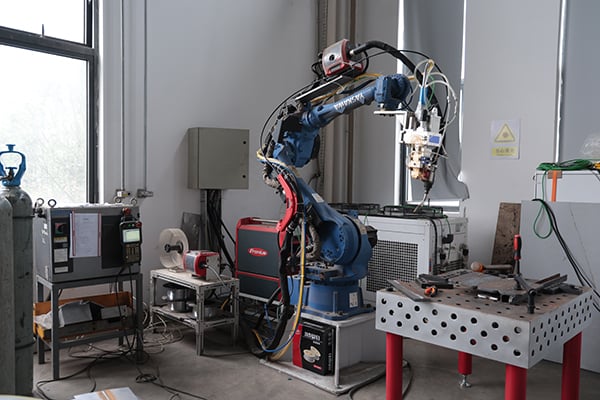 |
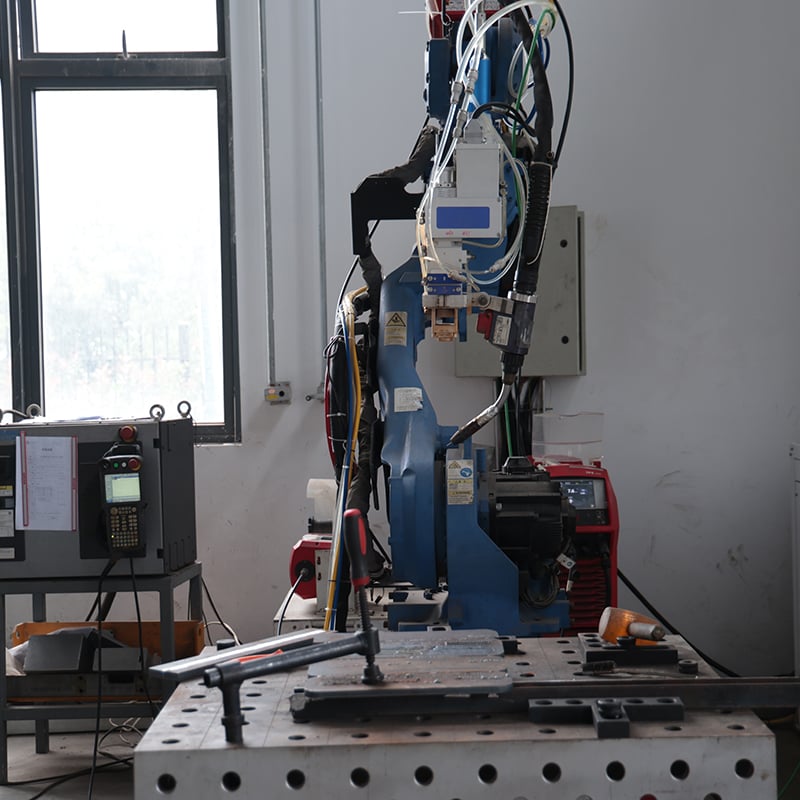
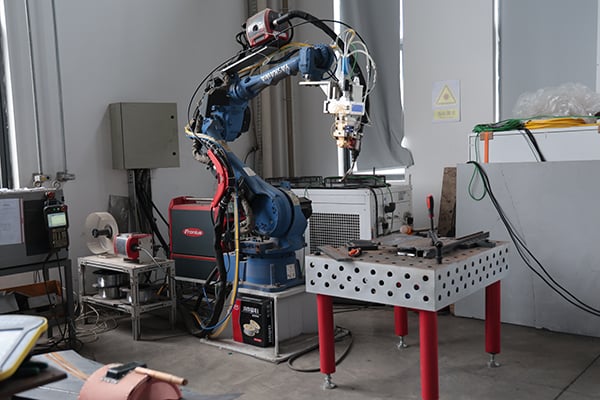
The robotic Laser‑MIG hybrid welding workstation couples two heat sources — high‑power fiber laser and MIG electric arc — and performs automated welding relying on a 6‑axis industrial robot. Laser‑induced plasma interacts synergistically with the electric arc, overcoming the drawbacks of pure laser welding (narrow gap tolerance) and conventional arc welding (low welding speed and large thermal deformation). It delivers a synergistic “1+1>2” welding effect for automated high‑quality welding of medium‑thick and thick plates made of carbon steel, high‑strength steel, stainless steel, aluminum alloy and other materials. Widely adopted in heavy‑duty equipment, rail transit, shipbuilding, engineering machinery and other industries, the workstation balances production efficiency, welding quality and process stability.
Core Advantages for Thick‑Plate Welding
 |
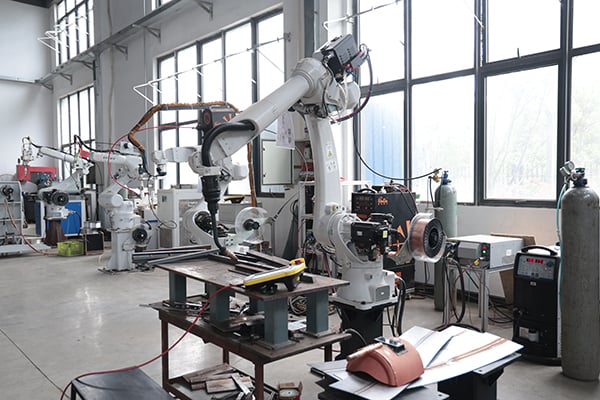 |
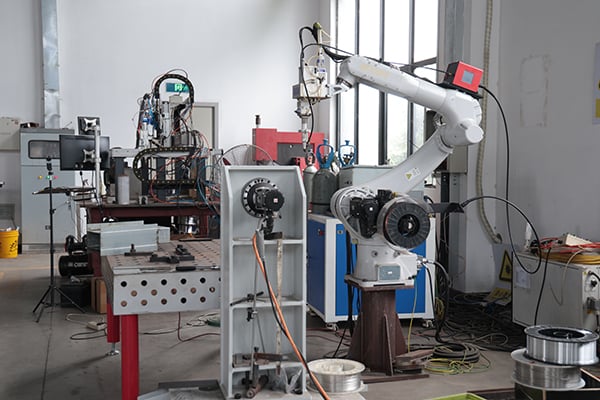
- High‑efficiency deep penetration with one‑sided welding & double‑sided forming High‑density laser energy achieves deep penetration, while the MIG arc fills the molten pool. Thick plates can realize one‑sided welding with double‑sided forming, eliminating multi‑pass welding procedures. Under equivalent plate‑thickness conditions, its welding efficiency is 2‑3 times higher than traditional arc welding, greatly shortening production cycle. Plates of 10‑12 mm steel can be welded in a single pass.
- Excellent gap bridging capability It removes the strict gap requirement of pure laser welding, tolerates certain assembly‑gap variations, lowers requirements for pre‑machining and assembly accuracy of workpieces and reduces rework costs, well matching practical production conditions in heavy industries.
- Low‑distortion and low residual stress The hybrid heat source brings far lower heat input than conventional arc welding with narrow heat‑affected zones. Welding deformation can be reduced by about 50 %, which greatly cuts post‑weld correction workload and ensures dimensional accuracy of large‑size structural parts.
- Superior defect suppression performance Optimized solidification rate of molten pool effectively mitigates porosity and cracking risks in thick‑plate welding. Laser‑induced plasma stabilizes the electric arc, resulting in minimal spatter, uniform and aesthetic weld appearance as well as excellent mechanical properties of welded joints with improved tensile and fatigue performance over conventional arc‑welded joints.
- Feasible welding for high‑reflectivity material thick plates Pre‑heating effect from the arc addresses low energy absorption in laser welding of high‑reflectivity and high‑thermal‑conductivity materials such as aluminum alloys, enabling stable automated welding for aluminum‑alloy medium‑thick plates.
System Technical Features
 |
 |
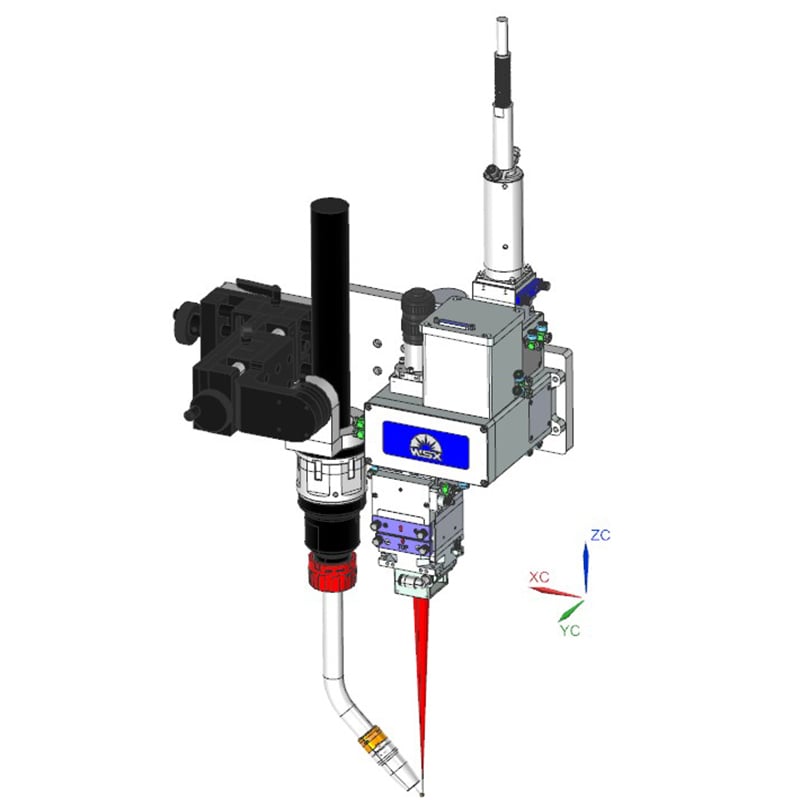
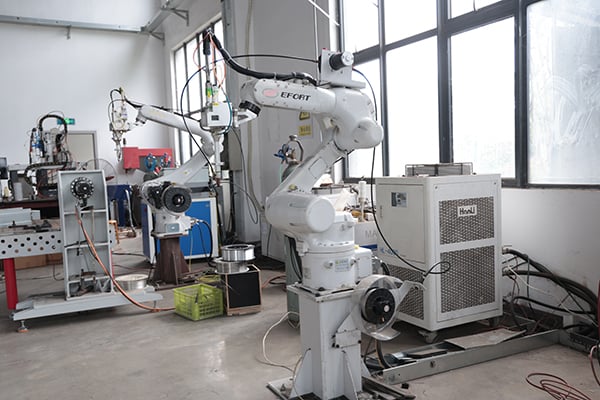
- Integrated hybrid welding head Self‑developed compact laser‑MIG hybrid welding actuator is equipped with weaving welding function. Laser‑wire distance and defocus amount can be adjusted conveniently. Its compact size grants good welding accessibility for complex‑geometry welds, compatible with butt, fillet and lap joints.
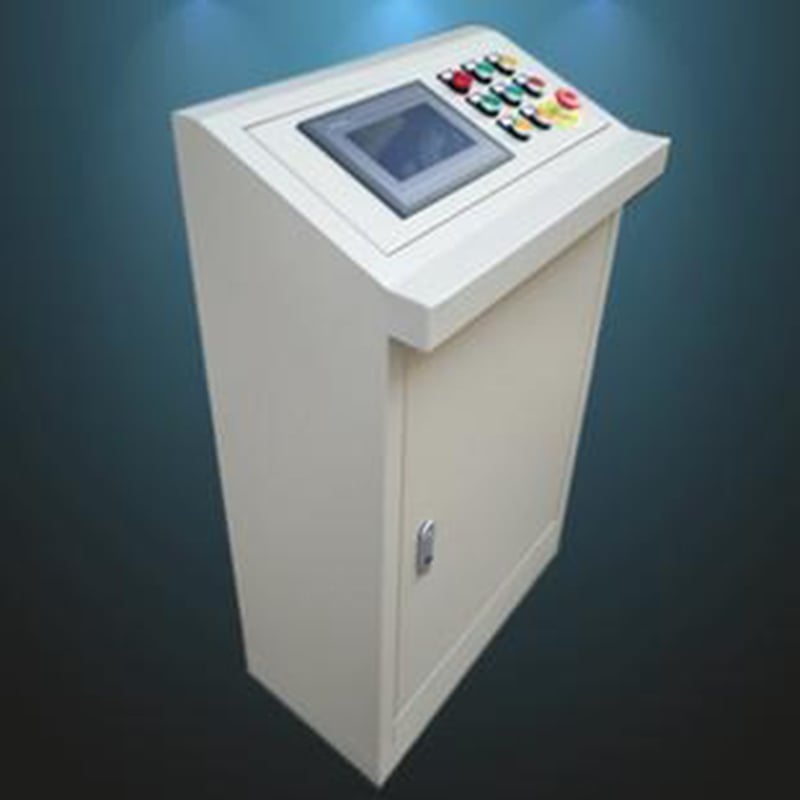
- Intelligent coordinated multi‑heat‑source control Adopting PLC‑integrated control system with visual human‑machine interface. The laser system, MIG arc welding system and wire‑feeding system operate both independently and cooperatively for switching of multiple process modes. Emergency‑stop safety protection is provided; welding‑condition monitoring module is optional for expansion.
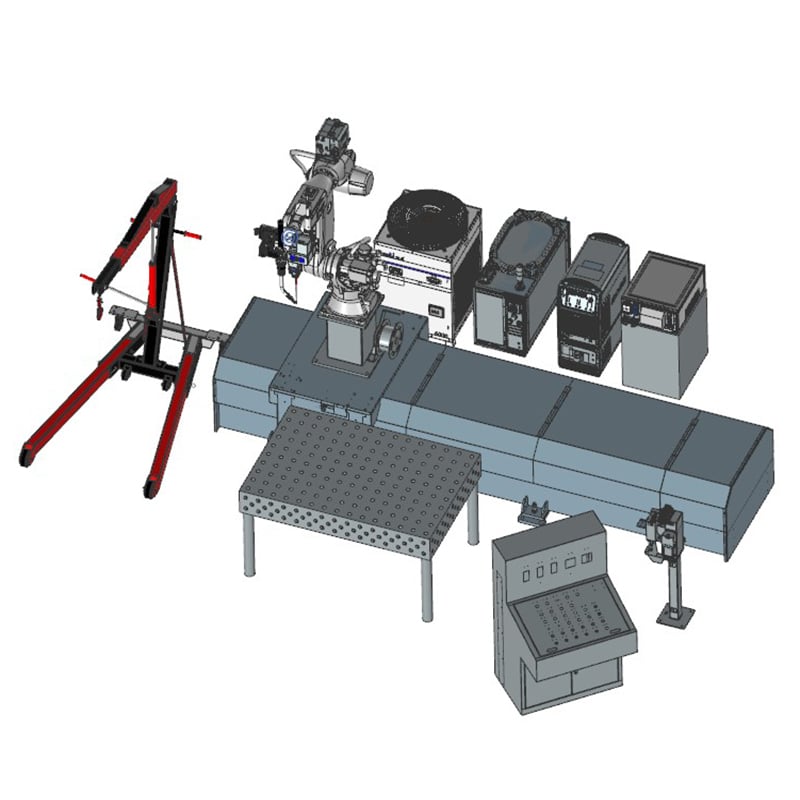
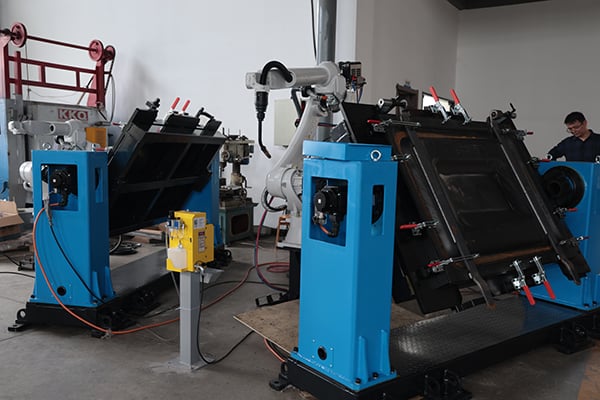
- High‑rigidity robotic mobile operation solution A 6‑axis heavy‑duty industrial robot works with an enclosed ground track to extend robot working range for long welds on large‑sized workpieces. High repeat positioning accuracy of ground track guarantees trajectory consistency of long welds. A 3D flexible welding platform supports flexible fixture clamping for multi‑variant workpiece production.
- Complete automatic auxiliary units Automatic torch cleaning and wire‑cutting station performs torch cleaning, anti‑spatter oil spraying and wire cutting to lower manual maintenance frequency. A motor‑driven mobile hoist assists heavy‑workpiece loading & unloading and reduces labor intensity. The workstation features neat layout and high integration.
- Strong process expandability Welding power source supports single‑pulse, dual‑pulse, deep‑penetration and other welding modes with stable low‑current arc starting, compatible with filler wires for carbon steel, high‑strength steel, stainless steel, aluminum alloy. It can be integrated with sheet‑metal bend‑springback measuring system and teaching resource packages for both industrial production and vocational training purposes.
Main Performance Parameters
 |
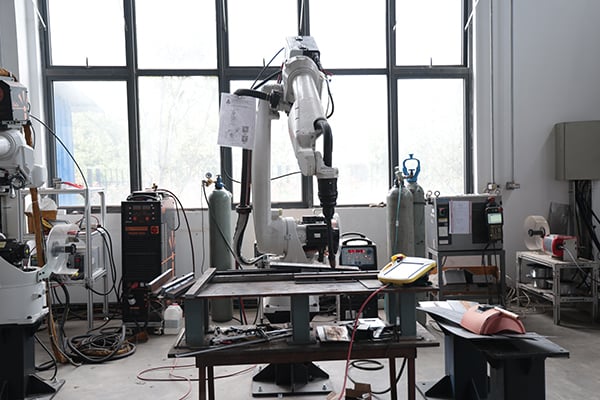 |
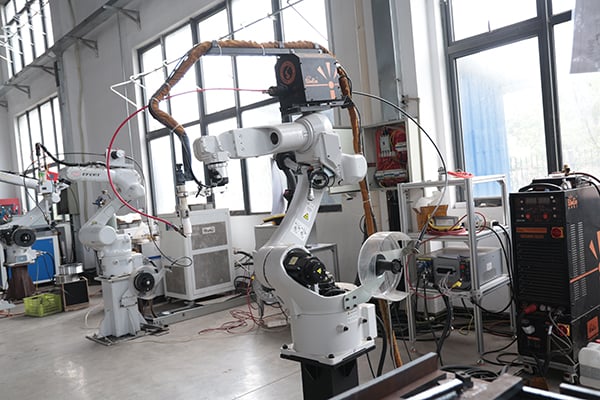
- Robotic System: 6‑axis welding robot manipulator, robot control cabinet, teach pendant, power & communication cables
- Laser‑MIG Hybrid Welding System: 6000 W fiber laser, laser water chiller, laser welding head, MIG pulsed welding power source, 4‑roll wire feeder, air‑cooled robotic welding torch, hybrid‑welding clamping assembly
- Mechanical Tooling Unit: robot base, enclosed mobile ground track, 3D flexible welding platform, torch cleaner, motor‑driven mobile hoist, magnetic lifting sling
- Electrical Control System: Siemens‑based PLC control system, operation console with dedicated multi‑heat‑source coordinated control software
- Auxiliary Supporting Unit: sheet‑metal bend‑springback measurement system, teaching resource package, consumables & accessories
| Item | Specification |
|---|---|
| Robot Model | ER35‑1800 |
| Robot Payload | 35 kg |
| Robot Repeat Positioning Accuracy | ±0.05 mm |
| Robot Reach | 1851 mm |
| Rated Laser Power | 6000 W |
| Central Laser Wavelength | 1080 nm |
| Max. Allowable Power of Laser Welding Head | 6000 W |
| MIG Welding Power Source Model | MIG‑500RP Plus |
| MIG Output Current & Voltage Range | 30 A / 15.5 V ~ 500 A / 39 V |
| Wire‑feeding Speed Range | 1.0‑18.0 m/min |
| Applicable Wire Diameter | 0.8 / 1.0 / 1.2 / 1.4 / 1.6 mm |
| Ground Track Load Capacity | 0.5 T |
| Ground Track Repeat Positioning Accuracy | ±0.02 mm |
| Overall Workstation Footprint | 5500 mm × 5000 mm × 4000 mm |
| Torch‑Cleaning Cycle | Approx. 4‑5 s |
| Applicable Welding Materials | Carbon steel, high‑strength steel, stainless steel, aluminum alloy, etc. |
| Recommended Welding Speed | 15‑50 mm/s |
| Hoist Rated Lifting Capacity | 2 T |
Application Scenarios
- Engineering Machinery: Welding of medium‑thick plates for crane booms, crawler frames and large structural components. Improves thick‑plate joint quality, reduces welding deformation and accelerates production tempo.
- Rail Transit: Welding of aluminum‑alloy car bodies, stainless‑steel bolster and large rail‑equipment assemblies. Solves welding challenges for high‑reflectivity aluminum alloys and guarantees weld appearance and mechanical performance.
- Shipbuilding: Welding of butt joints and T‑joints for ship plates. Realizes one‑sided welding double‑sided forming for thick plates, reduces welding passes and enhances manufacturing efficiency of hull components.
- Petrochemical Equipment: Welding of medium‑thick‑plate components such as pressure vessels and pipelines. Lowers residual stress and ensures reliability of welds for pressure‑bearing parts.
- Steel‑Structure Manufacturing: Automatic welding for heavy steel structures and box‑type workpieces. Tolerates assembly‑gap fluctuation and reduces post‑weld correction workload.