EN
 AR
 CS
 NL
 FR
 DE
 IT
 JA
 KO
 PL
 PT
 RU
 ES
 UK
 TH
 TR


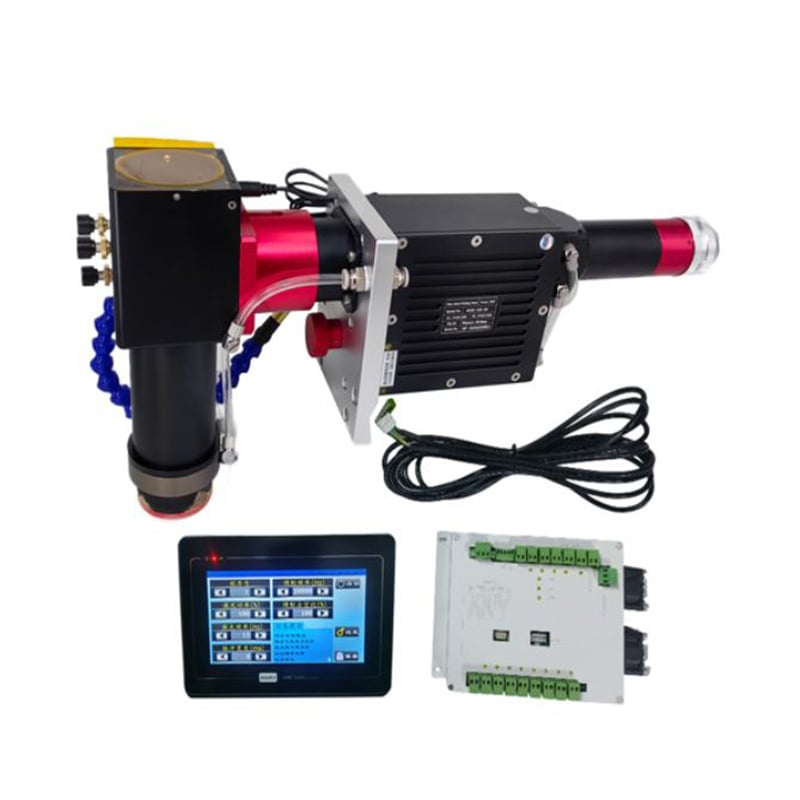
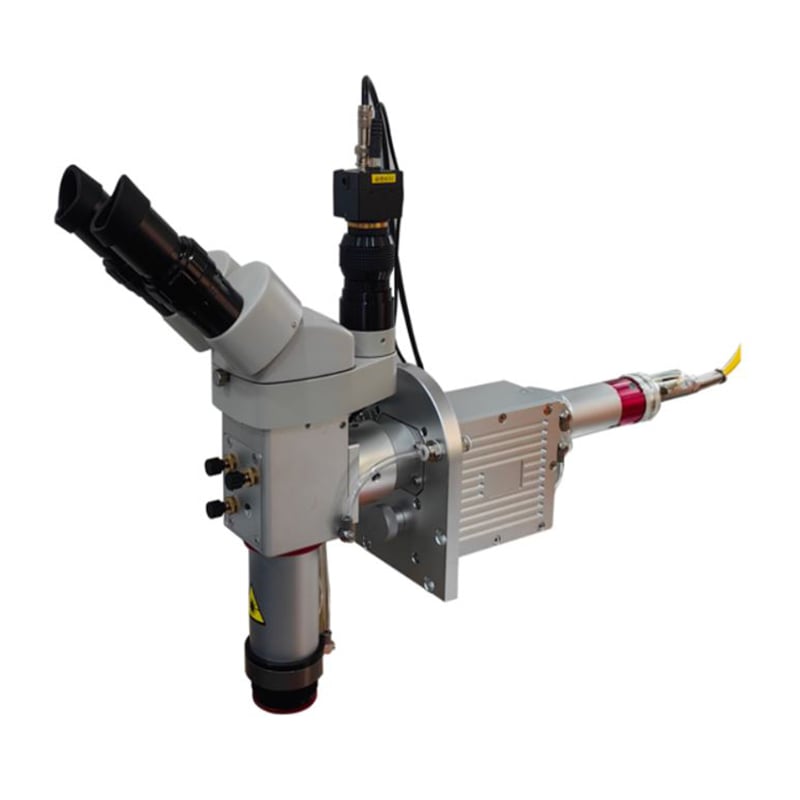
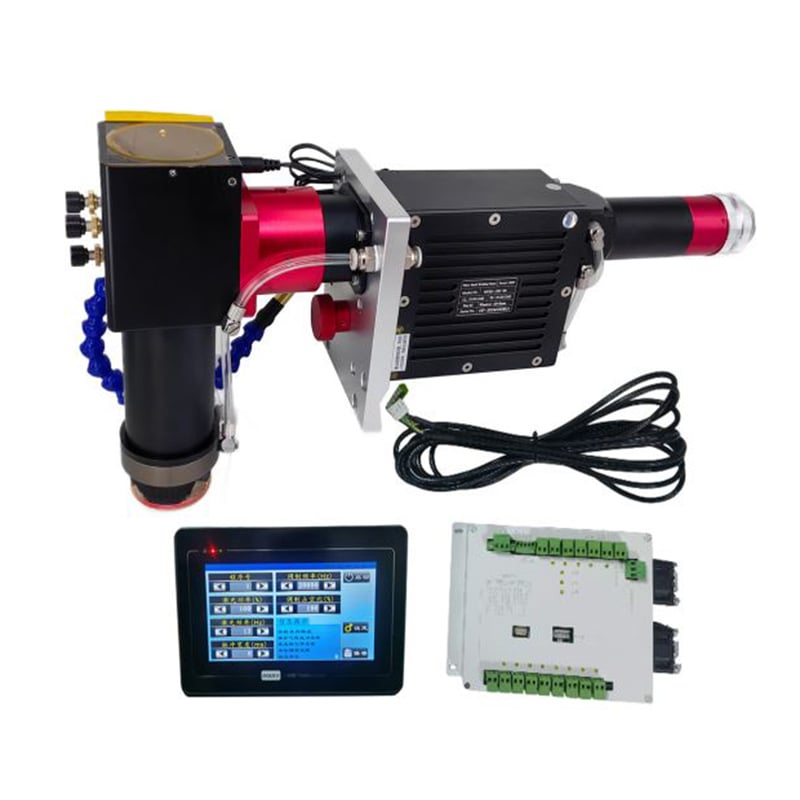
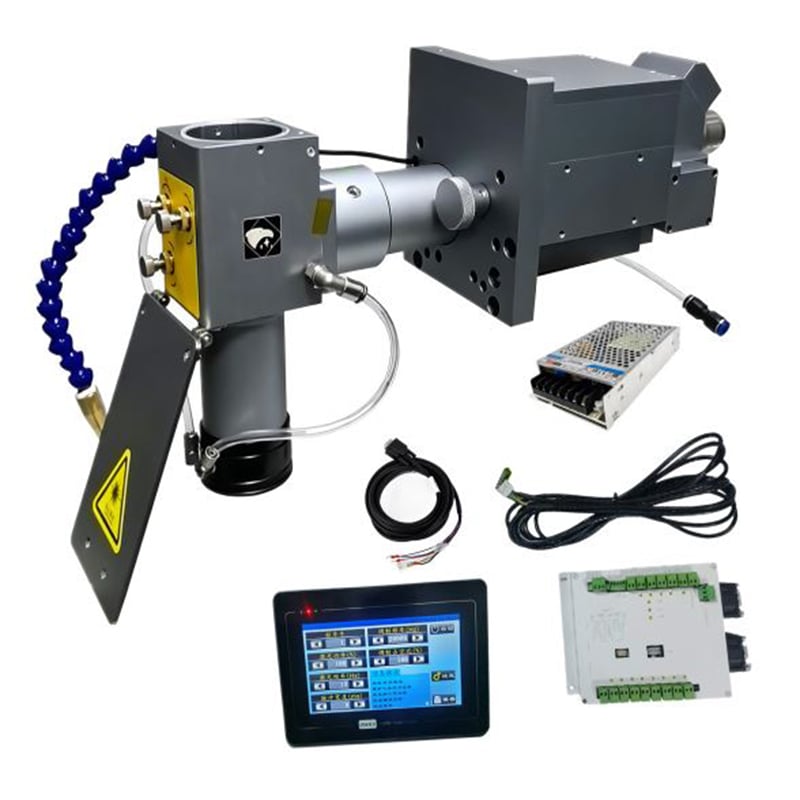
Fiber Mold Laser Welding Head
Product Overview & Working Principle
 |
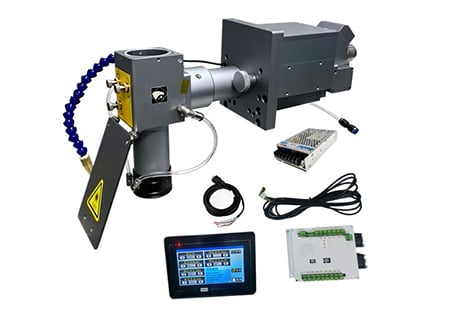 |
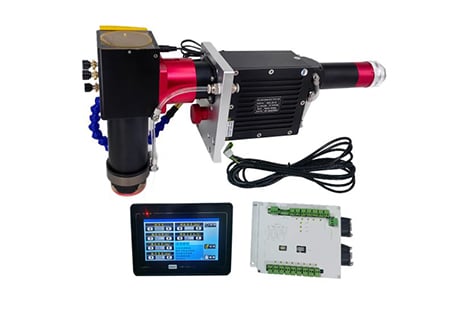
The mold laser welding head is a key component of laser welding equipment and the core execution unit connecting the laser source to the workpiece. Using a fiber laser as the light source, it delivers the laser beam directly through a QBH interface to adjust the focal length, working distance, and obtain the appropriate spot size, enabling high-precision repair welding on local defects such as mold cavities, inserts, and cutting edges. Compared with traditional argon arc welding and YAG mold welding, laser welding features concentrated heat input, minimal post-weld deformation, and little to no post-machining, making it an essential tool for improving efficiency and reducing costs in the mold manufacturing and maintenance industry.
During operation, the laser beam is introduced through the QBH interface, shaped by the collimating assembly, adjusted in diameter by the beam expander body, and then focused by the focusing optics into a high-energy-density spot of the required size onto the repair area. Simultaneously, the shielding gas delivery unit supplies shielding gas to prevent oxidation of the molten pool, the cooling system dissipates heat to ensure stable operation, and the microscope/CCD and lighting aid precise positioning. The operator can quickly change the focal point position and spot size via the rotating adjustment barrel and lead-screw fine adjustment to suit different working conditions. In laser welding processes with feedback control, the welding head also integrates monitoring and feedback control units to achieve closed-loop control of weld quality.
Product Structure & Components
 |
 |
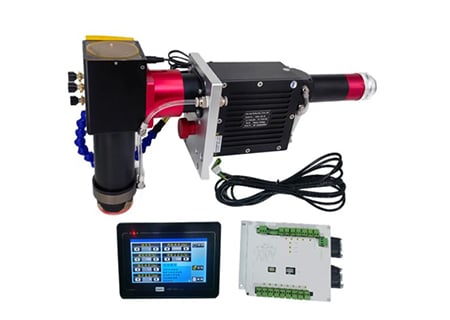
The mold laser welding head consists of the laser focusing and delivery unit, shielding gas delivery and distribution unit, cooling system, and lens protection system. Taking the HP20F mold welding head as an example, it includes a control card + display screen, with all media connections built into the welding head. Its components are as follows:
| Component | Function |
|---|---|
| QBH Interface | Direct connection to fiber lasers with QBH connector for laser delivery |
| Collimating Assembly | Collimates and shapes the incident laser beam |
| Beam Expander Body | Adjusts beam diameter and divergence to match different welding ranges |
| Rotating Adjustment Barrel | Manual adjustment of focal point position and working distance |
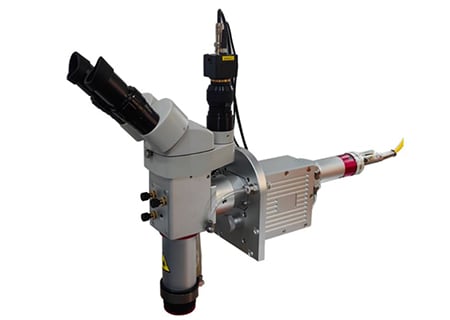
| Microscope / CCD Monitoring System | Magnified weld observation for precise positioning (optional) |
| Reflective Lens Set | Guides and redirects the optical path |
| Water-Cooled Objective Lens | Dissipates heat from the objective lens for stable high-power output |
| Shielding Gas Device | Delivers coaxial/side shielding gas to protect the welding area |
| Lighting Lamp | Auxiliary illumination for observation (red/blue/white light optional) |
| Control Card + Display Screen | Integrated human-machine interface for laser parameter adjustment |
- Dedicated to mold repair, efficient and economical: With a strong advantage in mold repair welding applications, it is a cost-effective welding head that significantly improves efficiency over traditional mold welding, with lower power consumption and no consumables;
- Quick spot adjustment: The welding spot can be rapidly adjusted via the lead screw to switch between different working conditions and repair requirements;
- Fully sealed dust-proof design: The internal structure is completely sealed, effectively preventing optical components from dust contamination and ensuring long-term stability of the optical system;
- 3-way cooling system: Excellent heat dissipation performance, no pressure under long-term use, supporting continuous high-power operation;
- Universal QBH interface: Compatible with various lasers with QBH connectors, offering strong versatility and easy replacement;
- 7-inch touchscreen control: Good human-machine interaction experience for convenient laser parameter adjustment;
- Compact and durable structure: Precise welding, durable, easy to maintain and adjust, with all media connections built into the welding head for a clean and reliable design;
- Dual-swing welding option (dual-swing mold welding head): Supports multiple swing modes including circle, ellipse, figure-eight, square, line, and concentric patterns, with adjustable swing frequency and diameter, significantly improving repair efficiency and weld consistency;
- Compact body option (QCW welding head): Can be equipped with microscope or CCD on top, ideal for precision component spot welding.
Application Scenarios
 |
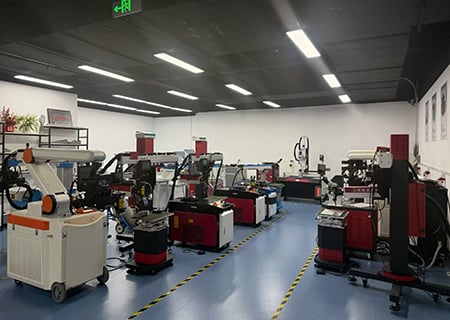 |
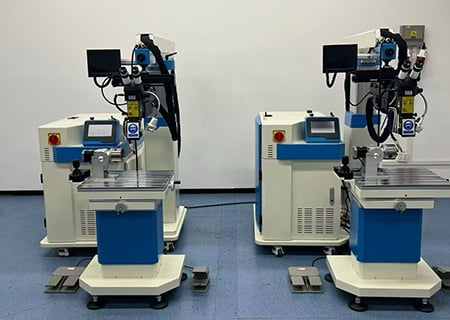
Mold laser welding heads are widely used in the mold manufacturing and maintenance industry as well as precision metal processing, with typical scenarios including:
- Injection Mold Repair: Repair welding of cavity scratches, edge chipping, and vent wear;
- Die-Casting Mold Maintenance: Surfacing and repair of thermal cracks and erosion defects;
- Hardware Stamping Molds: Rapid repair of worn punches and die cutting edges;
- Precision Insert Welding: Pre-welding and repair of mold core inserts;
- Precision Component Spot Welding: Precise spot welding of tiny components with microscope/CCD;
- Chain Welding: Efficient batch welding of chain-type parts;
- Metal Plate Welding: Laser welding of stainless steel, carbon steel, copper, iron, aluminum, and other plates;
- Advertising Letter & Hardware Welding: Large clear aperture to meet most hardware component welding needs;
- Machinery Component Repair: Local repair welding of shafts, gears, and other metal parts.