EN
EN
 AR
AR CS
CS NL
NL FR
FR DE
DE IT
IT JA
JA KO
KO PL
PL PT
PT RU
RU ES
ES UK
UK TH
TH TR
TR



Robot Laser Welding Technology Training
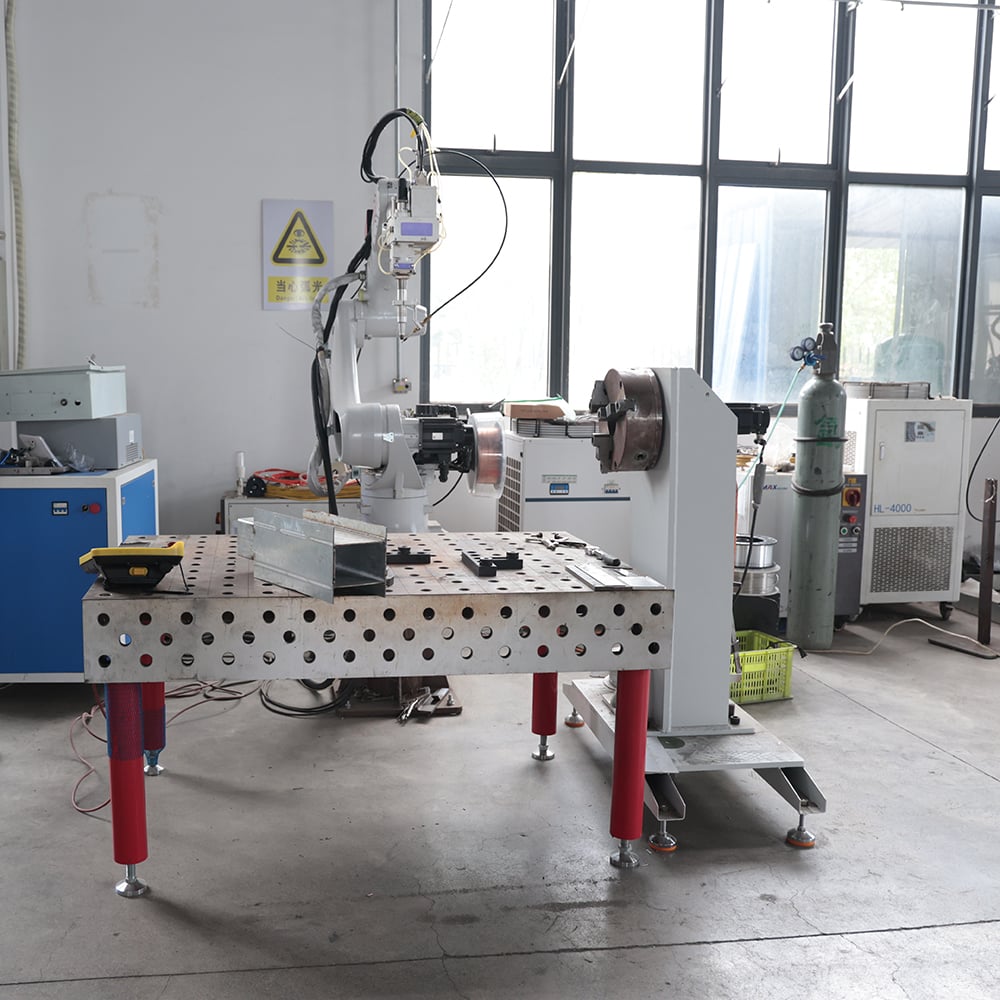
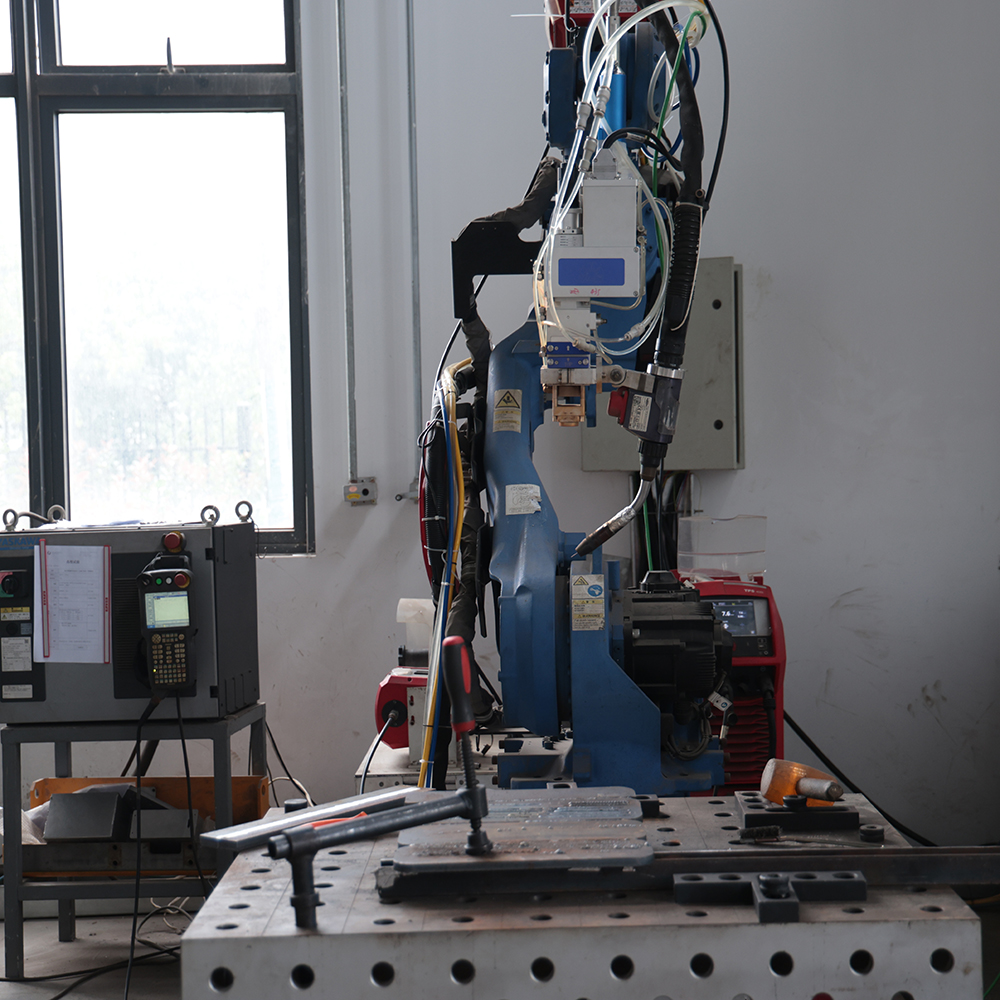
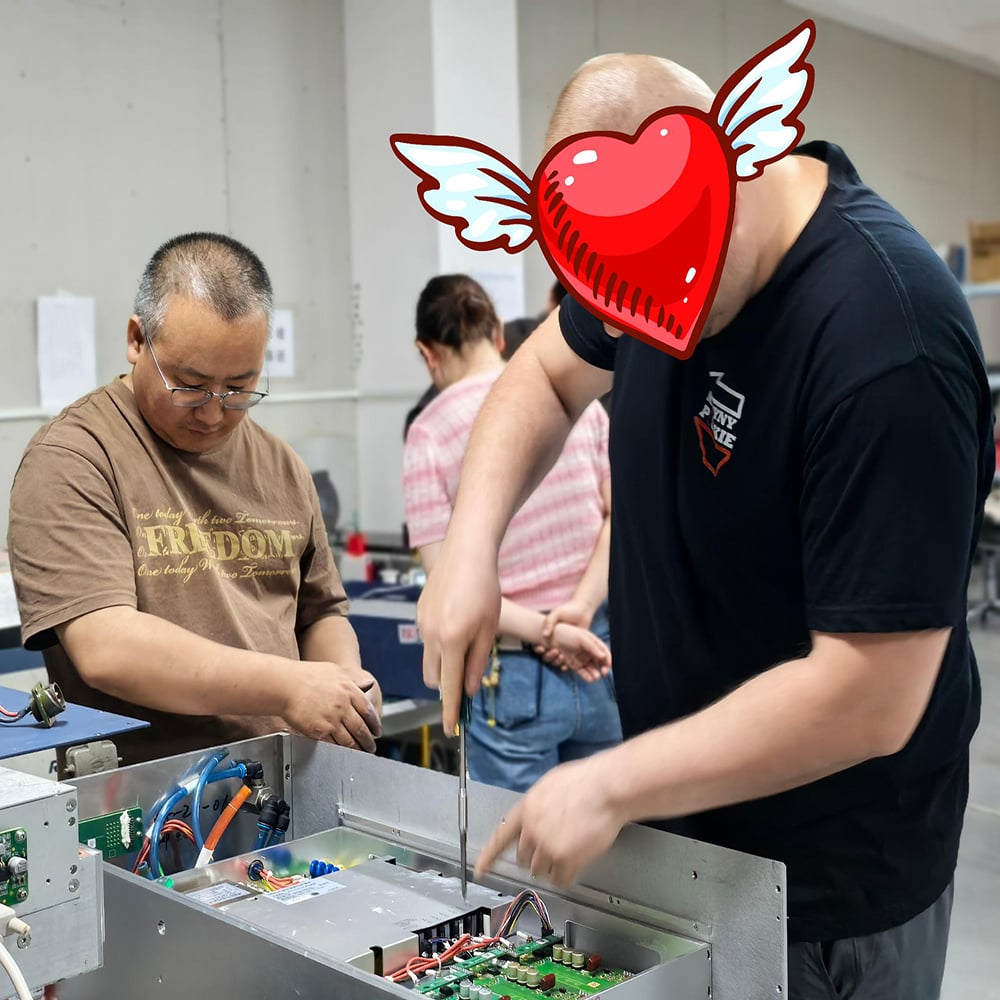
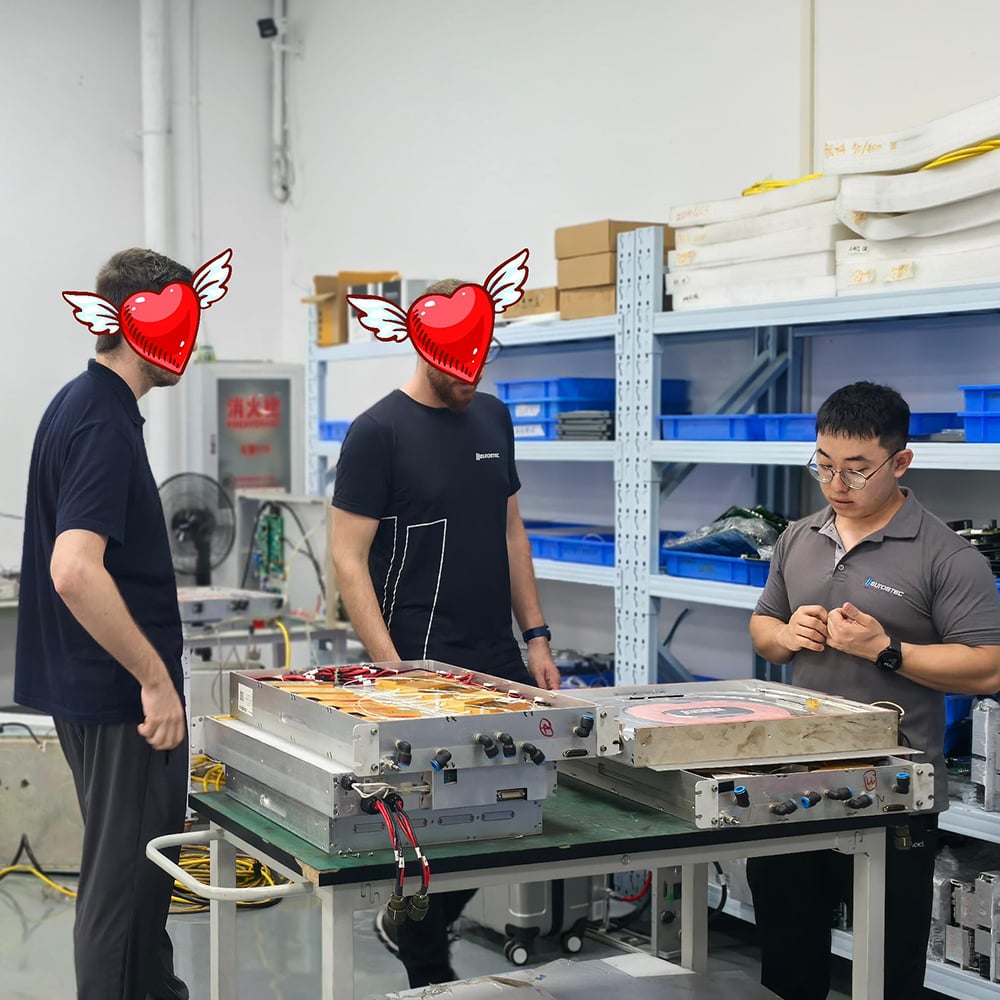
DMK offers hands‑on robot laser welding training for overseas partners. Small‑group on‑site workshops cover six core modules, enabling customers to complete automated welding‑station installation, integration, commissioning and process development for local‑market business expansion.
Practical Teaching of Industrial Robot Teach‑in Programming
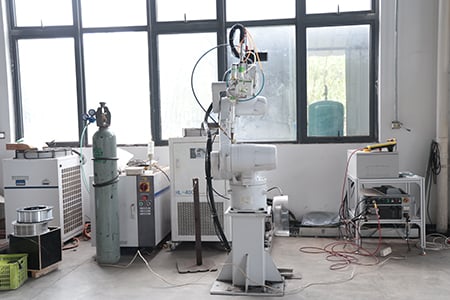
This module adopts six‑axis multi‑purpose industrial robots for laser‑welding‑oriented teach‑in training. Trainees learn robot coordinate systems and TCP (Tool‑Center‑Point) calibration for welding‑tool attitude correction. They master linear, circular and continuous trajectory motion instructions, including creation, jump, call‑up and archiving of welding programs.
 |
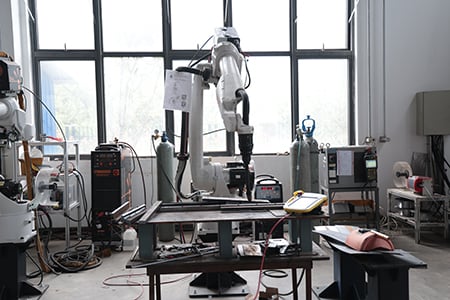 |
Trainees operate dedicated laser‑welding process packages on teach‑pendants to configure laser power, oscillation patterns, wire‑feeding linkage, power ramp‑up/‑down, breakpoint memory lap‑welding and wire‑sticking alarm functions. I/O signal configuration is practiced to realize signal interaction among laser sources, chillers and shielding‑gas units. Participants also learn homing, soft‑limit setting and emergency‑stop‑loop verification, and resolve on‑site faults such as motion interference and trajectory drift to write complete robot laser‑welding production programs independently.
Special‑topic Teach‑in Programming for Collaborative Robots
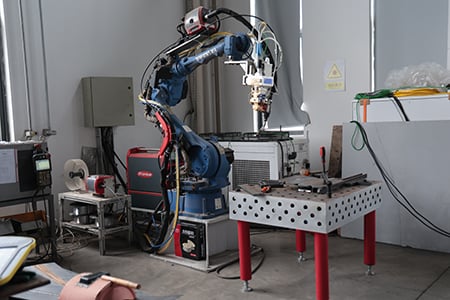
This session targets flexible low‑volume welding scenarios. It compares traditional six‑axis industrial robots with collaborative robots, explaining force‑control characteristics, drag‑and‑drop teach‑in and collision‑detection safety mechanisms.
 |
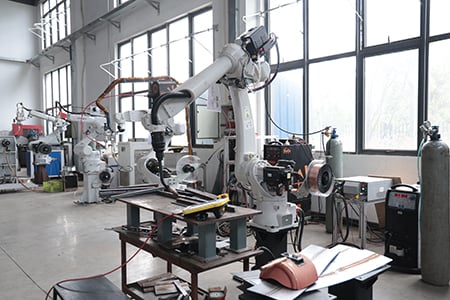 |
Trainees use direct drag‑and‑drop teach‑in to quickly reproduce welding trajectories and adjust force‑control parameters for thin‑sheet and special‑shaped workpieces. They develop collaborative‑robot laser‑welding programs, set safety stop boundaries and torque thresholds, and complete signal docking for laser enable, wire‑feed start/stop and oscillating welding heads. The training highlights lightweight workstation integration and application prerequisites for fence‑free operation, enabling program commissioning for small sheet‑metal and hardware parts.
Assembly Training for Robot Laser‑welding Equipment
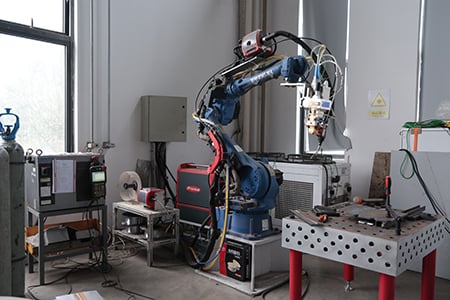
Full‑set robot laser‑welding workstation assembly exercises are carried out in the assembly workshop. Contents include robot‑base mounting, control‑cabinet wiring, QBH optical‑fiber routing (minimum bending radius ≥150 mm), mechanical installation of Raytools oscillating welding heads and assembly of CCD monitoring modules.
 |
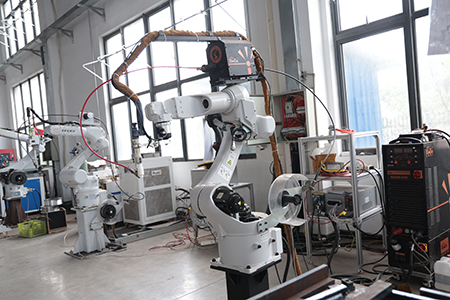 |
Trainees arrange and wire laser generators, chillers, voltage stabilizers and fume‑purification devices. They distinguish integrated‑cabinet and standard‑cabinet workstation schemes and follow wiring specifications for laser expansion I/O boards, aviation connectors and relay modules. According to factory acceptance standards, participants perform power‑on self‑check, red‑light positioning debugging and safety interlock testing, and troubleshoot optical‑path, water‑circuit and communication faults to finish full‑machine assembly and acceptance independently.
Commissioning of Laser Welding Push‑pull Wire‑feeding System
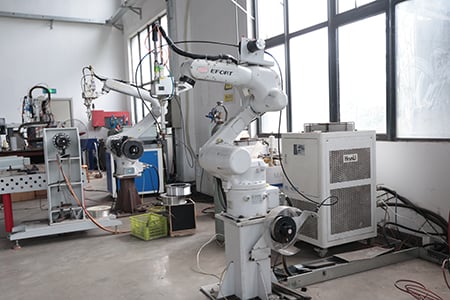
This module focuses on robot‑welding‑matched push‑pull wire‑feed systems. Trainees get familiar with hardware structures of general‑purpose and push‑pull wire feeders, and master wiring and 0‑10 V analog‑signal docking for wire‑feed controllers.
 |
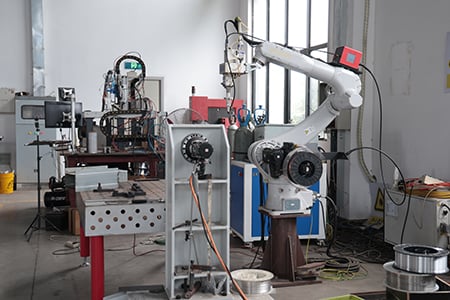 |
Practical items include wire‑feed‑speed setting, manual wire feed / retract, wire‑feed searching and anti‑wire‑sticking logic configuration. Trainees calibrate wire‑guide mechanisms to resolve common failures such as jitter, wire jamming, wire breakage and wire sticking. Combined with laser‑welding process packages, they realize linkage between robot programs and wire‑feed systems, adapt for wire diameters from 0.8 mm to 1.6 mm, and tune wire‑feeding parameters for carbon steel, stainless steel and aluminum alloy to complete the full set of filler‑wire laser‑welding commissioning workflow.
Configuration and Co‑commissioning of Robot Laser‑welding Positioners
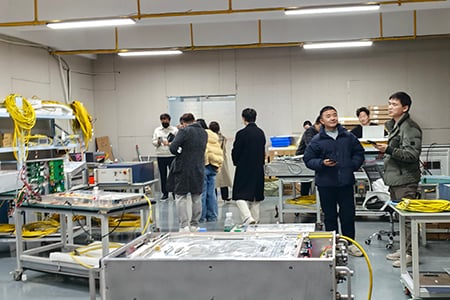
Trainees learn integration between positioners and welding robots. The course covers mechanical‑selection essentials for single‑axis tilting, dual‑axis L‑type and three‑axis positioners, including leveling, servo wiring and additional‑axis parameter configuration.
 |
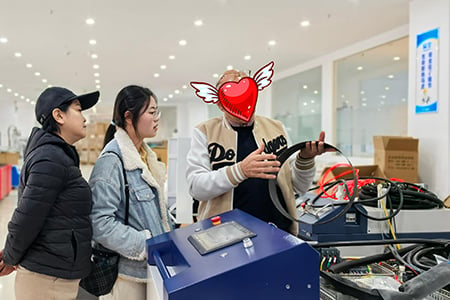 |
Participants perform external‑axis calibration to achieve interpolated linkage between robots and positioners. Collaborative motion programs are configured on teach‑pendants to keep workpieces in optimal welding attitude during rotation. Trainees practice rapid‑positioning fixture design, optimize welding attitudes for box‑shaped, tubular and ring‑shaped workpieces, set positioner speed and angle limits, and resolve integration problems such as external‑axis synchronization deviation and jitter to finish co‑welding commissioning for complex multi‑attitude workpieces.
Laser Welding Process and Seam‑tracking‑system Application
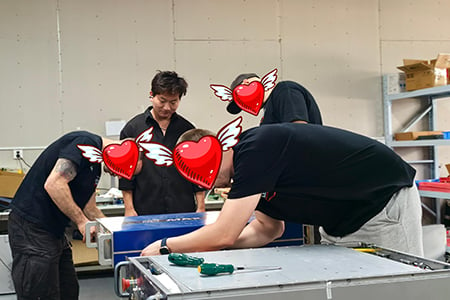
This advanced‑process module conducts multi‑material welding practice on real‑world equipment. Trainees practice butt, fillet, lap and multi‑layer multi‑pass welding. They tune oscillating welding‑head patterns including straight‑line, circular and figure‑8 shapes, optimize laser power, travel speed, wire‑feed rate and shielding‑gas flow, and identify and remediate welding defects such as porosity, cracking, lack of fusion and undercut.
 |
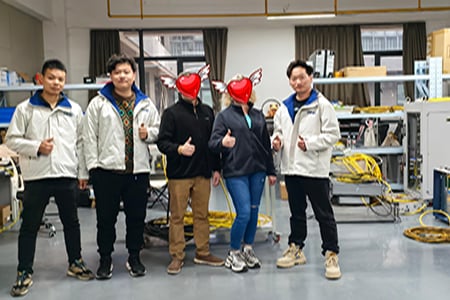 |
Special emphasis is placed on hardware mounting and calibration of seam‑tracking systems. Trainees differentiate contact‑based searching and laser‑vision seam tracking, debug real‑time seam recognition and path‑offset compensation, and understand linkage logic between tracking sensors and robot systems. Case studies improve workstation tolerance against workpiece‑clamping errors and sheet‑metal deformation to guarantee stable welding quality for mass production.