EN
EN
 AR
AR CS
CS NL
NL FR
FR DE
DE IT
IT JA
JA KO
KO PL
PL PT
PT RU
RU ES
ES UK
UK TH
TH TR
TR


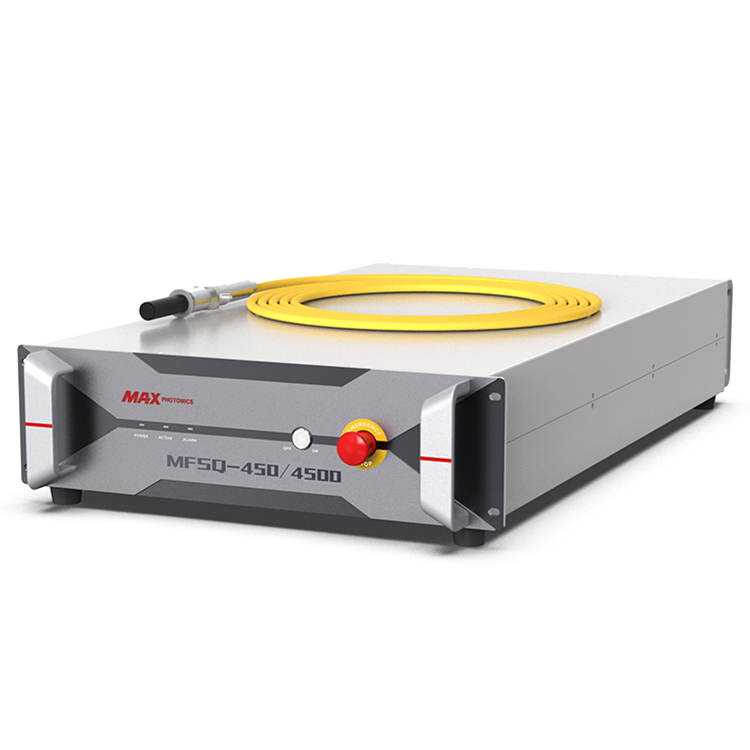
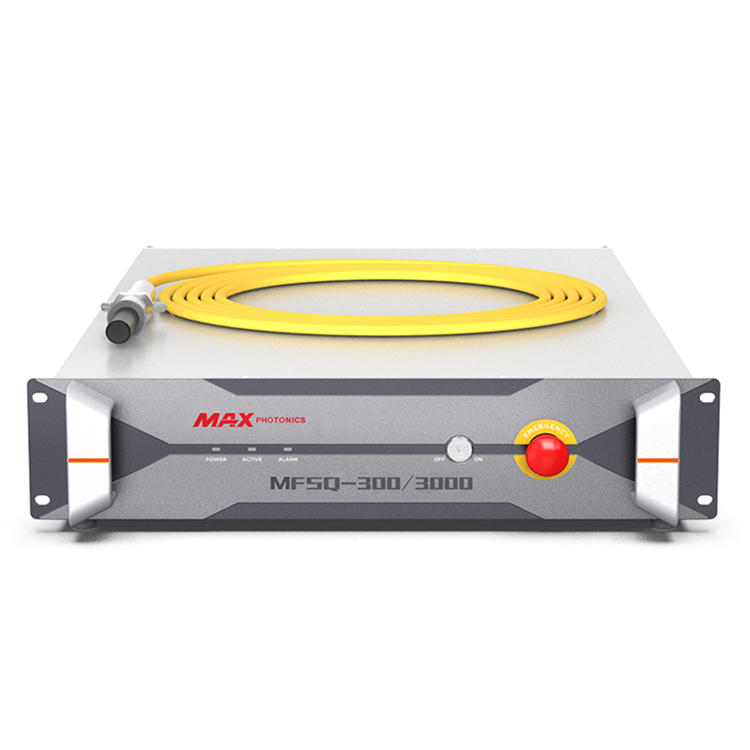
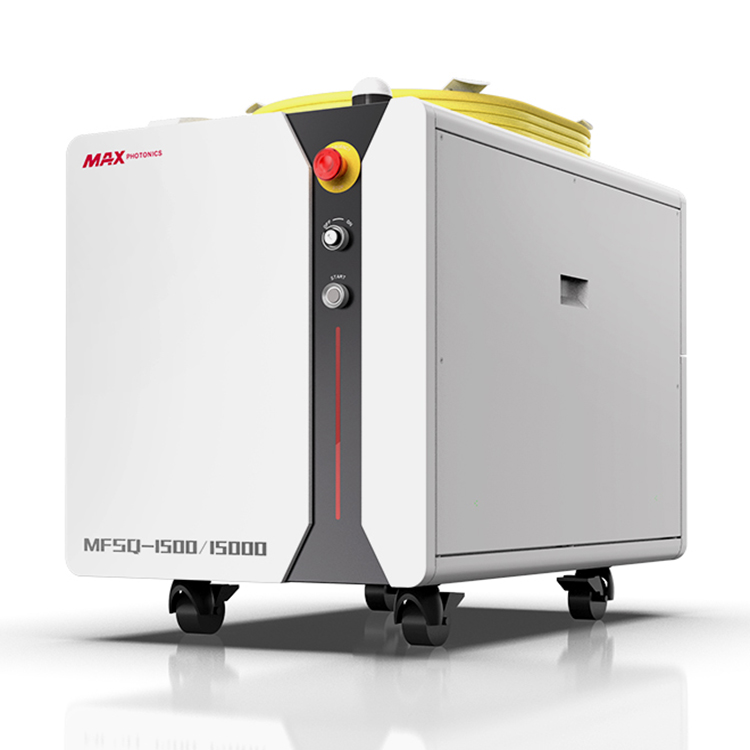
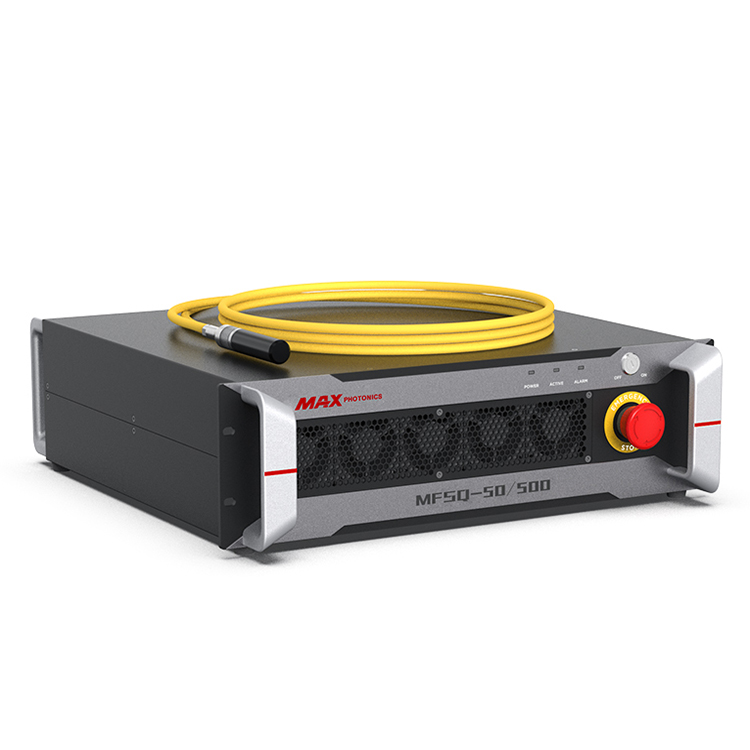
MAX QCW fiber laser
MFSQ Series Quasi-Continuous Wave (QCW) Fiber Laser Product Introduction
 |
 |
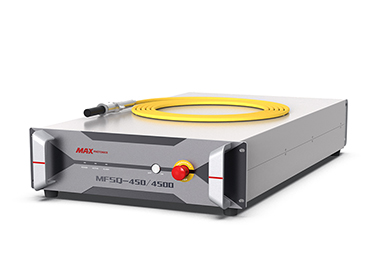
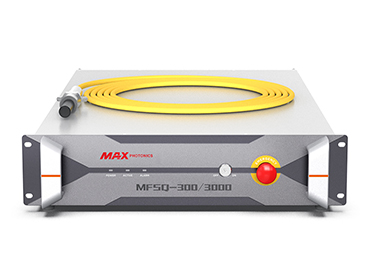
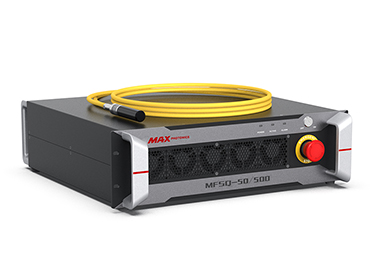
The MFSQ series of quasi-continuous wave (QCW) fiber lasers offers peak power up to 10 times the average power in pulsed mode. Through a modulation module, the continuous output is cut into high-duty-cycle pulse sequences, achieving millisecond-level long pulse width output while maintaining the high beam quality (M²≤1.1~1.3) of fiber lasers. This makes them ideal light sources for welding highly reflective materials, precision machining of thin plates, and connecting heat-sensitive devices.
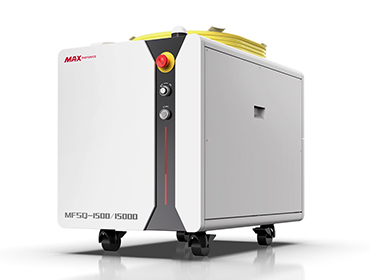
The MFSQ series covers power levels from 50/500W to 1500/15000W. The four main models—MFSQ 150/1500W, 300/3000W, 450/4500W, and 600/6000W—form a complete product matrix. Employing a dual air-cooling/water-cooling system, they are widely compatible with existing production lines and can directly replace traditional lamp-pumped YAG lasers, supporting precision machining upgrades in high-end manufacturing fields such as new energy, 3C electronics, and medical devices.
Features of MFSQ series quasi-continuous (QCW) fiber laser technology
 |
 |
Compared to international brands such as IPG Photonics and nLight, Chuangxin's MFSQ series, based on a vertically integrated domestic supply chain system, offers a significant cost-performance advantage while maintaining equivalent optical performance (beam quality M²≤1.3, electro-optical conversion efficiency>30%). IPG and nLight adopt a standardized product strategy, while Chuangxin offers deep customization capabilities tailored to the characteristics of China's manufacturing industry:
1. Selectable fiber core diameter: Supports customization of multiple output fiber core diameters such as 14μm, 30μm, 50μm, 100μm, and 200μm to meet the spot diameter requirements of different application scenarios (IPG typically provides a standard configuration);
2. Waveform editing function: Built-in 16 sets of programmable waveform storage, supports gradient pulse shaping, which can avoid "weld tube" or porosity defects at the start/end of welding (compared to IPG which requires an external pulse shaper);
3. Dual versions with air and water cooling: Models such as the MFSQ 150/1500W offer a compact air-cooled design, eliminating the need for an external chiller, making it more suitable for handheld welding and flexible deployment on production lines (IPG in the same power range is mostly water-cooled).
IPG has a technological advantage in the ultra-high power range (such as above 15000W) and possesses high-end features such as adjustable AMB beam mode. Chuangxin achieves a more compact size (overall dimensions 950×482.6×193.2mm) and more flexible interface protocols in the mid-power range (150-600W average power) through modular design, making it more suitable for integration into automated production lines.
Product Technical Parameters
 |
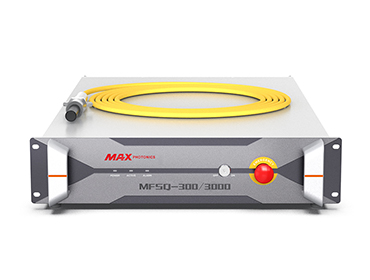 |
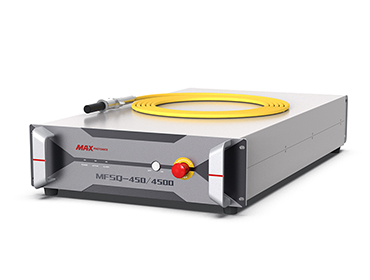
This series includes four models: MFSQ 150/1500W, MFSQ 300/3000W, MFSQ 450/4500W, and MFSQ 600/6000W. Specific technical parameters are as follows (subject to actual shipment; customization is available upon request):
| Technical Specifications | MFSQ 150/1500W | MFSQ 300/3000W | MFSQ 450/4500W | MFSQ 600/6000W |
| Average Power (Continuous Mode) | 150W | 300W | 450W | 600W |
| Peak Power (Pulse Mode) | 1500W | 3000W | 4500W | 6000W |
| Maximum Pulse Energy | 15J | 30J | 45J | 60J |
| Power Adjustment Range | 10%-100% | 10%-100% | 10%-100% | 10%-100% |
| Modulation Frequency | 1-5000Hz | 1-5000Hz | 1-5000Hz | 1-5000Hz |
| Pulse Width Range | 0.02-50ms | 0.1-50ms | 0.1-50ms | 0.1-50ms |
| Duty Cycle Range | 0-50% | 0-50% | 0-50% | 0-50% |
| Center Wavelength | 1070nm | 1070nm | 1070nm | 1070nm |
| Beam Quality (m²) | ≤1.1 | ≤1.3 | ≤1.3 | ≤1.3 |
| Output Fiber Core Diameter | 14μm/30μm | 30μm/50μm | 50μm/100μm | 50μm/100μm |
| Cooling Method | Air-cooled | Water-cooled | Water-cooled | Water-cooled |
| Operating Voltage | 220V AC | 380V AC | 380V AC | 380V AC |
| Rated Power Consumption | <1.5kW | <3.5kW | <5kW | <7kW |
| Ambient Temperature | 10-40°C | 10-40°C | 10-40°C | 10-40°C |
Product Applications
 |
 |
The MAX QCW quasi-continuous fiber laser, with its advantages of pulsed and continuous dual-mode operation, full power range coverage, and high adaptability, is widely used in precision machining scenarios across multiple industries. Specific applications include:
1. 3C Consumer Electronics Industry
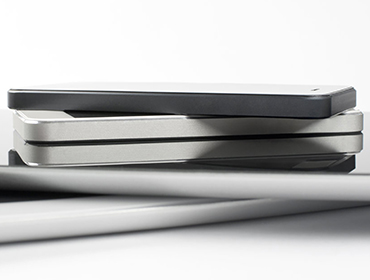
Suitable for the precision machining of 3C products such as mobile phones, tablets, and computers. This includes welding of internal antennas, mid-boards, and cameras in mobile phones; character marking on charging heads and accessories; perforation of volumetric holes; and precision spot welding of materials such as 0.2-0.3mm stainless steel and copper (e.g., spot welding of charging cable plugs). The weld diameter can be controlled within 0.1mm, resulting in a smooth, deformation-free appearance. Compared to traditional YAG lasers, it offers higher processing precision and faster efficiency. It can also achieve precision cutting of brittle materials such as ceramic substrates, with no slag buildup on the bottom and no edge cracking, meeting the miniaturization and precision machining needs of the 3C industry.
2. Power Battery Industry
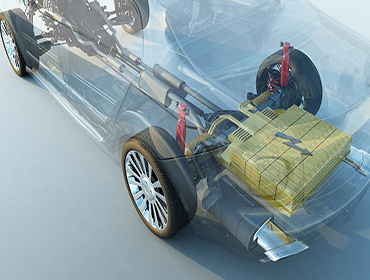
Focusing on the entire processing of new energy power batteries, covering the welding and cutting of power battery electrodes, electrode caps, tabs, battery casings, and explosion valves. It is suitable for precision spot welding of materials such as 0.1-0.2mm nickel tabs, aluminum casings, and stainless steel electrode caps, providing uniform and stable output energy, strong welds, and effectively avoiding problems such as incomplete welds and missing welds, thus improving battery safety and lifespan. For the processing needs of highly reflective materials in power battery production, it can efficiently overcome the reflectivity of copper and aluminum materials, significantly improving processing efficiency and product qualification rate.
3. Precision Manufacturing and Jewelry & Watch Industry
Suitable for welding and marking precision medical components (such as welding 0.2mm titanium alloy pillars and caps) and precision instrument parts. It features a small spot size, precise energy control, and no blackening or deformation after welding, meeting high-precision processing requirements. In the jewelry industry, it enables the cutting, marking of characters and patterns on rings, necklaces, and other ornaments, precisely controlling processing accuracy while preserving the original texture of the jewelry. In the watchmaking industry, it can complete the marking of characters/graphics on dials and case backs, as well as the cutting and processing of hands and gears, meeting the precision requirements of the watchmaking industry.
4. Aerospace and Scientific Research
It is applied to the processing of 3D-printed metal parts inside aircraft, as well as the laser cleaning and refurbishment of aircraft engines and fuselages. With its high power and high stability, it can adapt to the high-intensity, high-requirement processing scenarios in the aerospace field, improving the processing accuracy and reliability of parts. Simultaneously, it can be used in scientific research, promoting physical/chemical reactions in materials and laser fusion experiments through laser irradiation, providing stable laser source support for scientific research.
5. Other Industries
In the advertising industry, it can be used for cutting and welding metal billboards and advertising frames, as well as marking advertising text, with high processing efficiency and good forming effect; in the automotive manufacturing field, it can be used for precision welding of automotive parts, adapting to the large-scale, high-precision production needs of the automotive industry; in the ceramic processing field, it can realize the precision cutting and drilling of ceramic materials, expanding the application scenarios of ceramic materials; in addition, it can also be applied to drilling, cladding, surface treatment and other processes of metal materials, adapting to the personalized processing needs of multiple industries.