

There is a lot of "laser magic" hidden in the items you touch every day—exquisite patterns on phone cases, brand logos on stainless steel water cups, and clear production dates on snack bags. Most of these wear-resistant and precise marks come ...
Contact Us
There is a lot of "laser magic" hidden in the items you touch every day—exquisite patterns on phone cases, brand logos on stainless steel water cups, and clear production dates on snack bags. Most of these wear-resistant and precise marks come from the technology of "laser marking". It is like an "invisible engraver" that can leave permanent and beautiful marks on the surfaces of metals, plastics, ceramics and other materials without touching them.
The principle of laser marking is actually very intuitive: laser has ultra-high energy density. When focused, it can concentrate energy in an area thinner than a hair, generating high temperatures to change the material's surface—either vaporizing to form depressions or oxidizing to change color, and finally leaving a mark. For example, when marking on the surface of stainless steel, the laser will form an oxide film on the metal surface, which not only leaves clear traces but also presents colorful effects such as golden yellow and sky blue through light interference; when engraving on acrylic, continuous laser can avoid bubbles, resulting in smooth and delicate patterns.
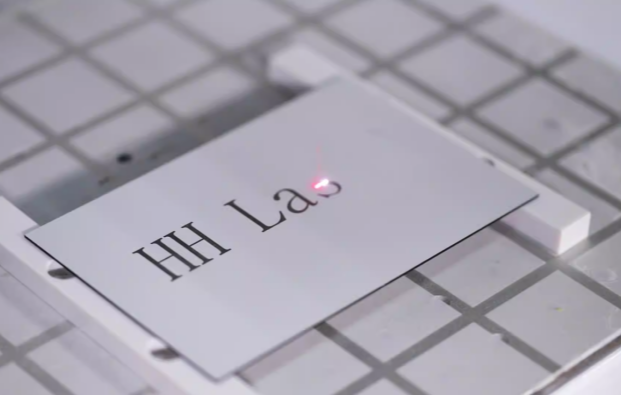
Compared with traditional printing and mechanical engraving, laser marking has obvious advantages. First, it is "zero-damage"—there is no tool head touching the material, so it will not deform the workpiece or generate internal stress, and even fragile electronic chips can be marked safely. Second, it has "high precision"—the focused laser spot can be as small as 0.02 mm, which can engrave fine numbers on tiny parts. Third, it is "ultra-durable"—laser acts on the surface or inside of the material, so the marks are resistant to friction, rain and chemical corrosion, and will not fade no matter how long they are used. Finally, it is "highly flexible"—the marking content can be modified at any time through computer software, from QR codes to cartoon patterns, which can be switched in a few minutes, making it very suitable for mass production.
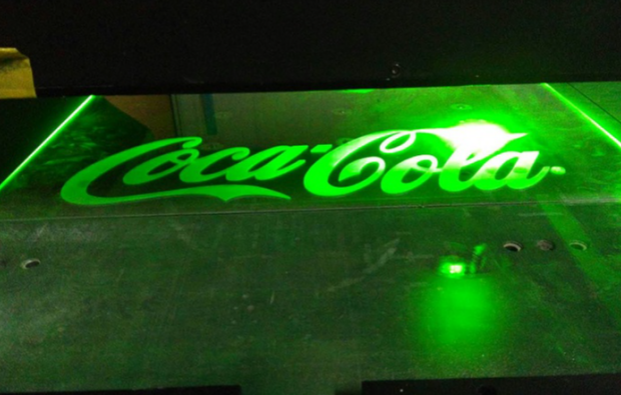
Nowadays, laser marking has long been integrated into our lives: in electronic products, the tiny numbers on integrated circuit chips and the logos on USB interfaces rely on it; in daily necessities, the embossing on leather wallets and the patterns on ceramic tableware cannot do without it; on food packaging, the production dates marked by it are not only environmentally friendly but also tamper-proof, and can also trace the source; even in the field of crafts, the reliefs on stone slabs and the customized text on wooden gifts are all its "works".
However, to achieve a good laser marking effect, you need to master the "parameter code". The laser power should not be too high or too low—too high power will ablate the material surface, while too low power will make the mark blurry. The scanning speed is also important—too fast will make the traces shallow, while too slow will cause over-processing. There is also the repetition frequency—too high frequency leads to insufficient single-pulse energy and faint marks, while too low frequency results in rough lines. For example, when marking on stainless steel, a combination of 20W power, 500mm/s speed, and 20-80kHz frequency can achieve a clear and beautiful effect. There is no need to worry about special materials. For example, if wood has poor absorption of ordinary lasers, applying a layer of carbon powder can assist absorption and easily solve the problem.
 EN
EN
 AR
AR CS
CS NL
NL FR
FR DE
DE IT
IT JA
JA KO
KO PL
PL PT
PT RU
RU ES
ES UK
UK TH
TH TR
TR