

This article explores the global landscape of 3D laser cutting machines, comparing the technological advancements and key products from international leaders like Trumpf and Prima Power with developments in China. It analyzes the performance of gantry-type vs. robotic systems and fiber laser vs. CO₂ laser technologies, while forecasting key trends such as higher power, increased speed and precision, and greater intelligence.
Contact Us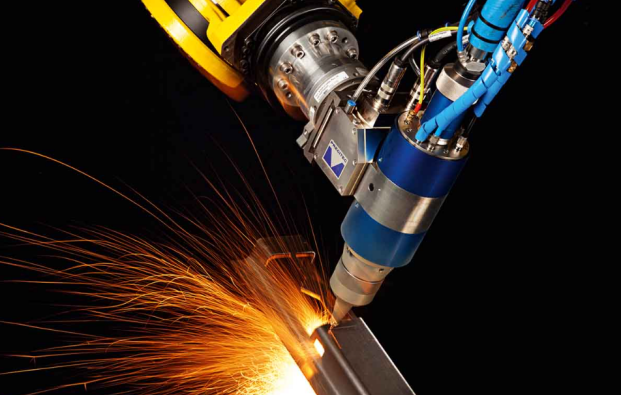
Global Development Status and Future Trends of 3D Laser Cutting Machines
3D laser cutting technology, essential in modern manufacturing sectors like automotive, aerospace, and mechanical engineering, has evolved significantly since the first five-axis CO₂ laser cutter was introduced in 1979. This article provides a comprehensive overview of the current state and future directions of this transformative technology on a global scale.
Ⅰ. System Architectures and Laser Technologies: A Comparative Analysis
3D laser cutting machines are primarily categorized into two structural types: Gantry-type and Robotic-type systems.
Gantry-type systems excel in providing a large workspace, high processing speed, and superior accuracy, making them ideal for precision tasks on large components, albeit requiring more floor space.
Robotic-type systems offer exceptional flexibility and access to complex geometries in tight spaces, though typically with slightly lower accuracy and speed. They are valued for their adaptability.
The core laser technology is another critical differentiator. Fiber lasers have become the dominant choice in the market due to their high cutting speed, exceptional precision, and impressive photoelectric conversion efficiency of around 30%. They are primarily used for cutting metals, especially thin sheets. In contrast, CO₂ lasers, while capable of processing both metals and non-metals, are less efficient (approx. 10% conversion) and are now often specialized for specific applications like cutting high-reflection materials or non-metals. YAG lasers, with even lower efficiency, have a more niche role.
Ⅱ. International Technological Leaders and Their Flagship Products
The global market for high-end 3D laser cutting machines is led by European and Japanese companies, renowned for their technological innovation and precision engineering.
Germany's Trumpf offers robust machines like the TruLaser Cell 3000 and 8030. These models are known for high modularity, allowing for cutting, welding, and cladding operations. They feature high accelerations (e.g., 4g) and positioning accuracies within ±0.015mm, catering to demanding, high-volume production environments in the automotive industry.
Italy's Prima Power contributes advanced solutions like the Rapido 3D five-axis machine. Equipped with fiber lasers ranging from 2.0 to 4.0 kW and featuring anti-collision systems, it emphasizes process flexibility and reliability for both cutting and welding applications.
Other notable players include Japan's Amada with its LCG3015AJ II, which boasts high rapid traverse speeds up to 170 m/min and integrated digital solutions for smart manufacturing.
While CO₂ laser technology is mature, it remains relevant. Trumpf's TruLaser Cell 7040, for instance, handles large-scale workpieces with travels up to 4x2x1 meters, demonstrating the continued application of CO₂ lasers in specific industrial segments.
Ⅲ. The Rising Profile of Chinese Manufacturers
China's industrial laser sector started later but has experienced rapid growth. Companies like Han's Laser, HG Laser, and DNE Laser have successfully launched competitive 3D fiber laser cutting machines. In terms of key technical parameters—such as positioning speeds of 50-120 m/min and accuracies within ±0.05 mm—domestic products are increasingly comparable to international counterparts. This progress reflects China's significant investment in laser technology R&D and its growing role in the global manufacturing equipment supply chain.
Ⅳ. Future Development Trends
The evolution of 3D laser cutting is poised to continue in several key directions:
Higher Power: Laser source power is steadily increasing, with 4-6 kW now common and multi-kilowatt machines emerging. This trend enables faster processing of thicker materials and reduces costs per part.
Enhanced Speed and Precision: Market demands are pushing for higher positioning speeds (with advanced machines reaching 280 m/min) and ever-tighter accuracies to meet the requirements of high-value industries.
Intelligent and Automated Operation: Alignment with Industry 4.0 is driving the integration of features like automated programming, intelligent process data management, remote monitoring, and self-diagnosis capabilities.
Functional Diversification: To maximize flexibility, future systems will continue to integrate multiple processes, such as combining cutting, welding, and additive manufacturing (cladding) in a single machine platform, as already seen in high-end models from leading international manufacturers.
Conclusion
The global market for 3D laser cutting machines is dynamic and innovative. While technological leadership in high-precision, multi-functional equipment remains concentrated with established international companies, Chinese manufacturers are closing the gap rapidly. The future will be shaped by machines that are more powerful, faster, smarter, and more versatile. For global manufacturers, staying abreast of these trends is crucial for maintaining a competitive edge. However, challenges remain, particularly for newer players, in mastering core components like high-power lasers and advanced CNC systems, and in deepening fundamental research into cutting mechanics. Continuous innovation across the international ecosystem is essential for driving the next wave of advancements in this critical manufacturing technology.
 EN
EN
 AR
AR CS
CS NL
NL FR
FR DE
DE IT
IT JA
JA KO
KO PL
PL PT
PT RU
RU ES
ES UK
UK TH
TH TR
TR