

The primary principle of laser wood cleaning involves using a high-energy laser beam to instantly vaporize or strip away surface contaminants (such as paint or stains) within an extremely short timeframe. Simultaneously, the pulse interval allows the...
Contact Us
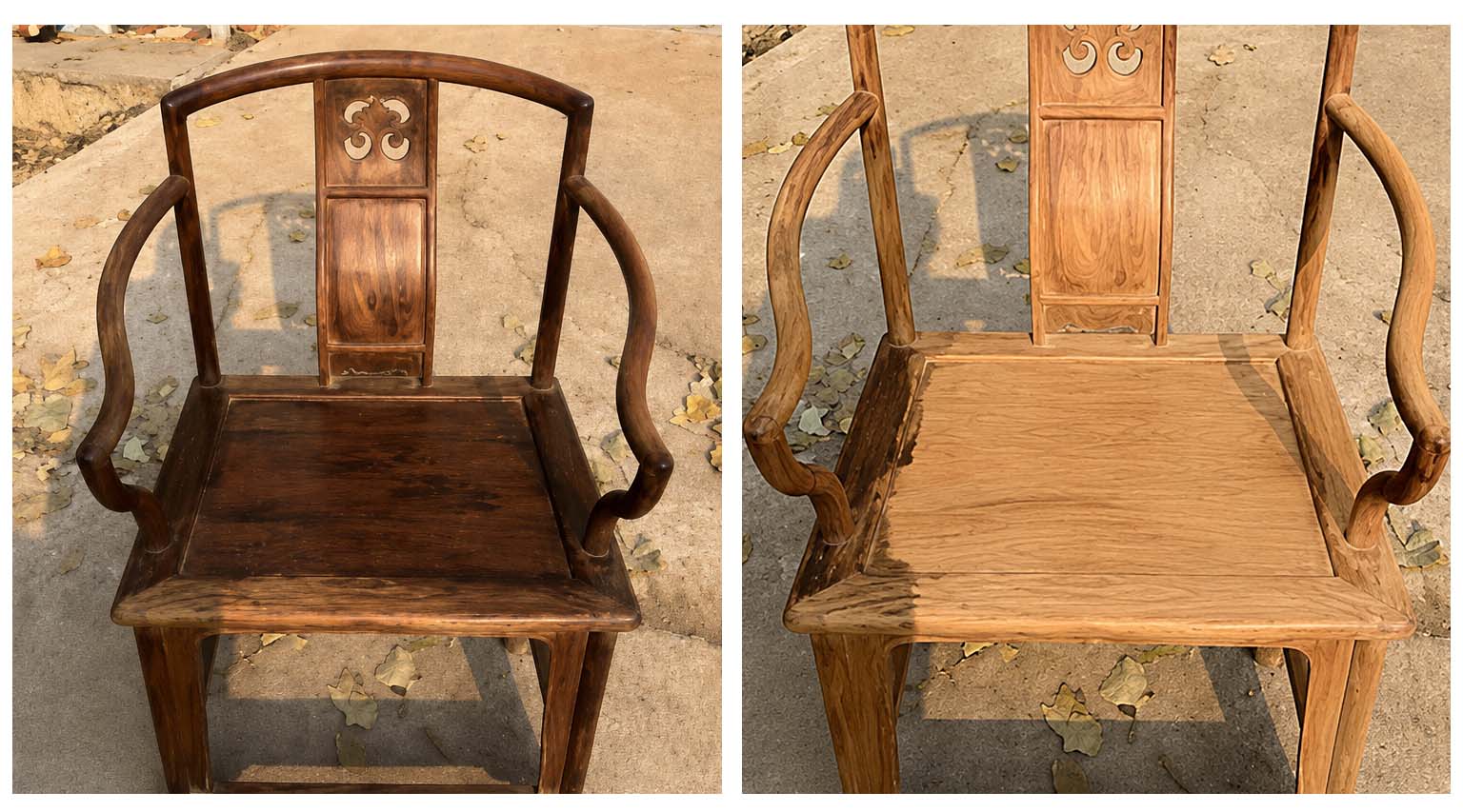
The primary principle of laser wood cleaning involves using a high-energy laser beam to instantly vaporize or strip away surface contaminants (such as paint or stains) within an extremely short timeframe. Simultaneously, the pulse interval allows the wood to cool, preventing damage. This process relies on the combined action of two physical effects. Compared to traditional sanding or chemical cleaning, laser cleaning offers significant advantages: it is a non-contact process that avoids physical abrasion and chemical corrosion, resulting in zero damage to the wood; the entire process is eco-friendly, requiring no chemical solvents and generating minimal waste; cleaning efficiency is high, with an overall improvement of approximately 50% over traditional methods; the process is precise and controllable, capable of handling complex structures and easily automated; and it has a wide range of applications, effectively removing paint, glue, stains, mold, and other contaminants. However, the method also has limitations: removing thick paint layers requires a layer-by-layer approach, which reduces efficiency; it demands a high level of technical skill, requiring professional training to determine optimal parameter settings; and improper settings can damage the wood or pigments. Moreover, not all coating types are applicable.
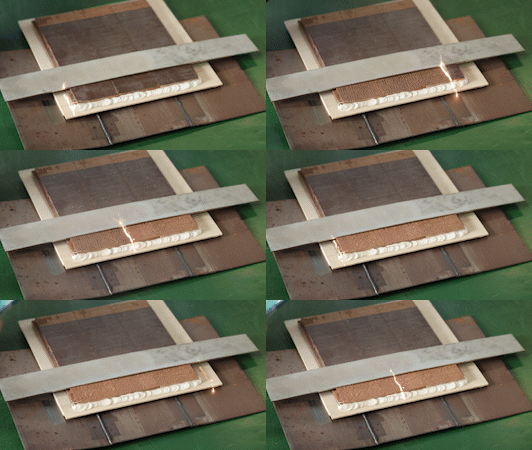
The key to laser wood cleaning lies in balancing "precise removal" with "material safety," as even a slight error can damage the wood. To ensure effective cleaning and operational safety, please pay attention to the following points:
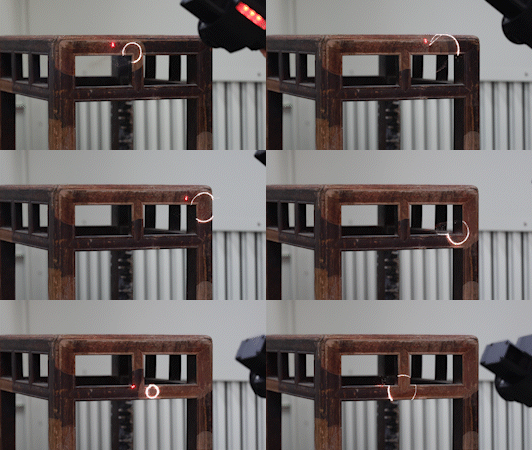
1.Laser source selection: A pulsed light source is essential (ideally 5 mJ or 1.5 mJ); continuous-wave (CW) sources should be avoided due to their intense thermal effects, which can easily cause the wood to char or burn. Pulsed sources release energy in short bursts, resulting in lower thermal impact; they primarily use shockwaves to strip away contaminants like paint, thereby better protecting the underlying wood.
2.Correct parameter settings: Use low-power settings for wood cleaning; insufficient power may result in incomplete cleaning, while excessive power can cause immediate charring. Select a circular pattern and adjust the scanning speed upward as appropriate. Avoid dwelling on a single spot for too long during cleaning and maintain the correct focal distance to prevent burning the wood.
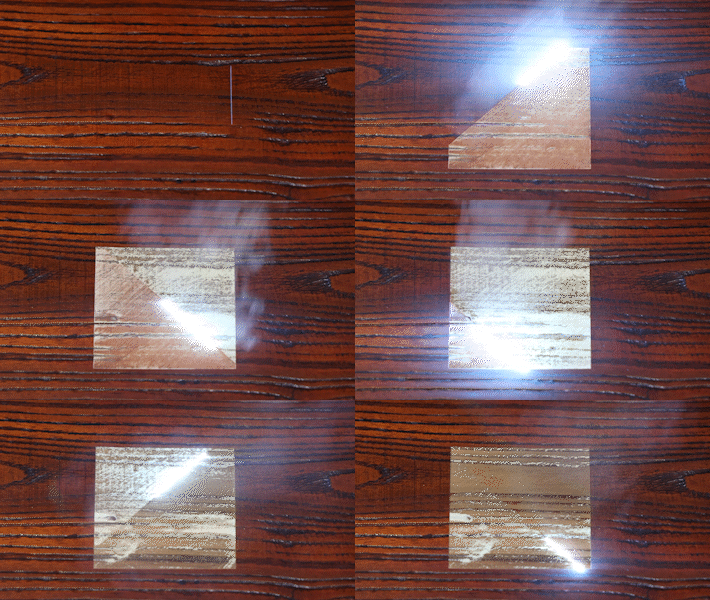
3.Enhance surface cooling: When cleaning materials that are sensitive to heat—such as pine or poplar—high-pressure air, blowers, or electric fans can be used to cool the workpiece surface; this helps minimize heat accumulation and prevents the material from reaching temperatures that would cause burning or carbonization.
4.Pre-clean easily removable contaminants: Before cleaning, removing easily accessible surface contaminants (such as oil stains or dust) can significantly reduce smoke generation and improve cleaning efficiency.
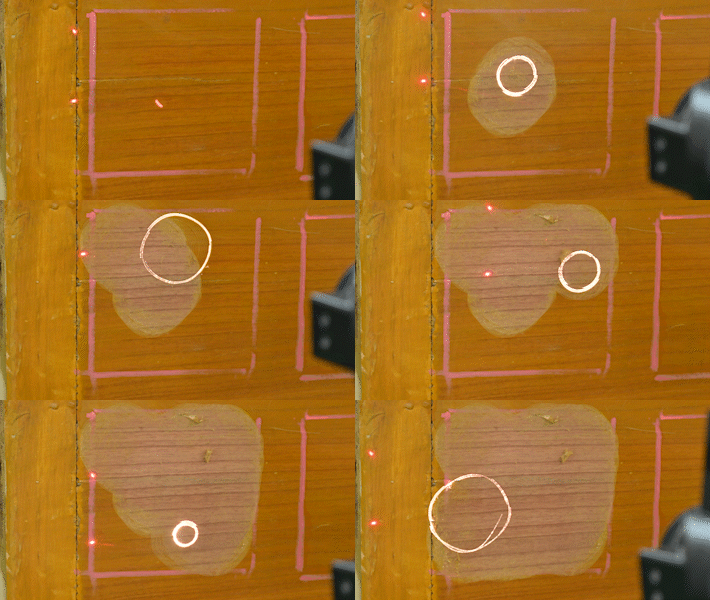
Finally, before commencing large-scale operations, it is advisable to conduct small-scale tests to verify that the parameters and results meet expectations, thereby avoiding irreversible damage to the workpiece. We hope this information proves helpful. We have also compiled a list of optimal parameters for pulsed laser cleaning of wood at various power levels; please feel free to email us if you need this information. You are also welcome to contact us with any questions regarding laser usage.
 EN
EN
 AR
AR CS
CS NL
NL FR
FR DE
DE IT
IT JA
JA KO
KO PL
PL PT
PT RU
RU ES
ES UK
UK TH
TH TR
TR