EN
EN
 AR
AR CS
CS NL
NL FR
FR DE
DE IT
IT JA
JA KO
KO PL
PL PT
PT RU
RU ES
ES UK
UK TH
TH TR
TR


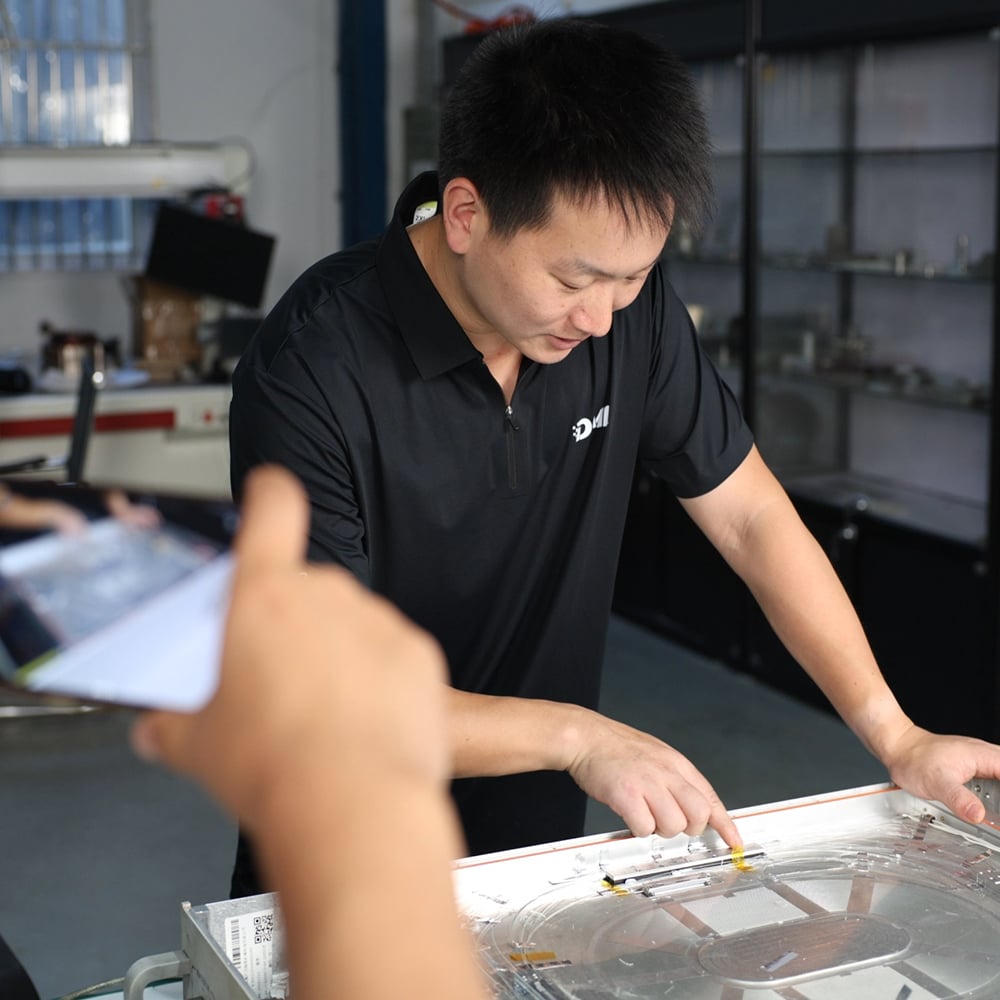
Laser Welding Technology Training
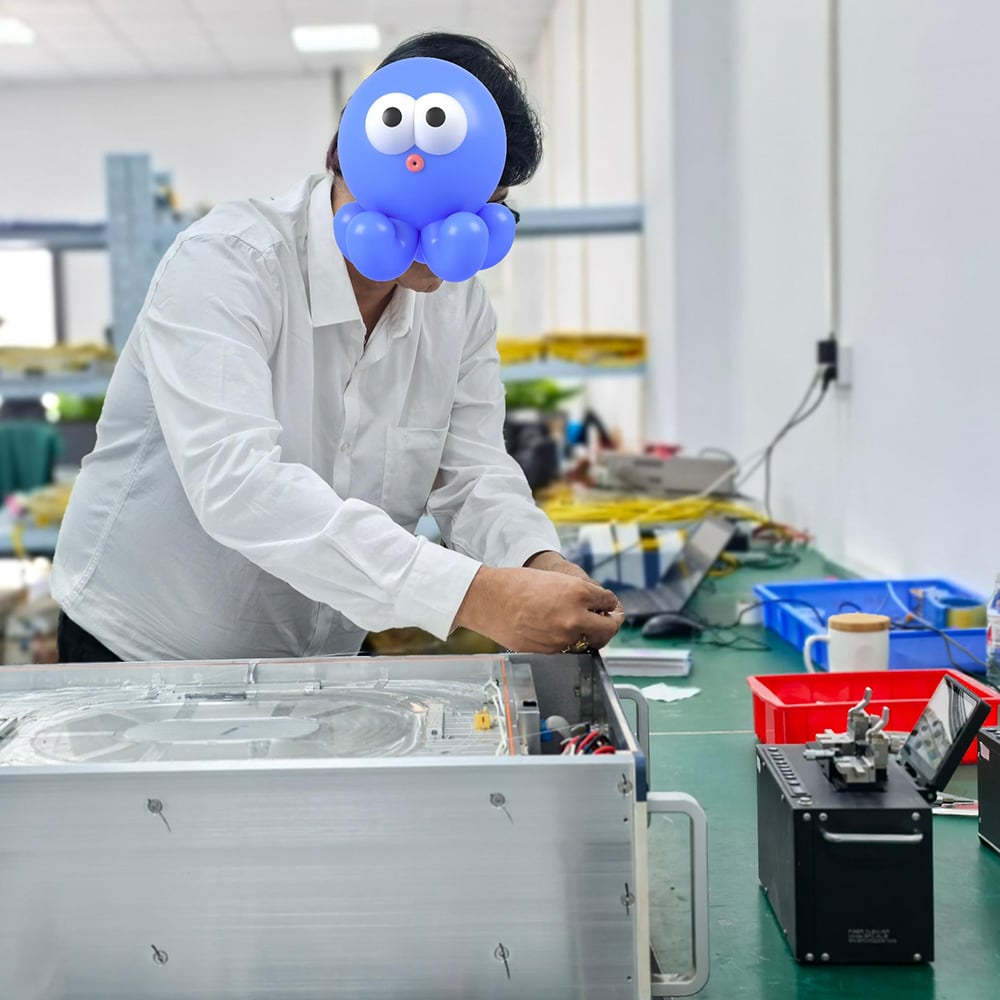
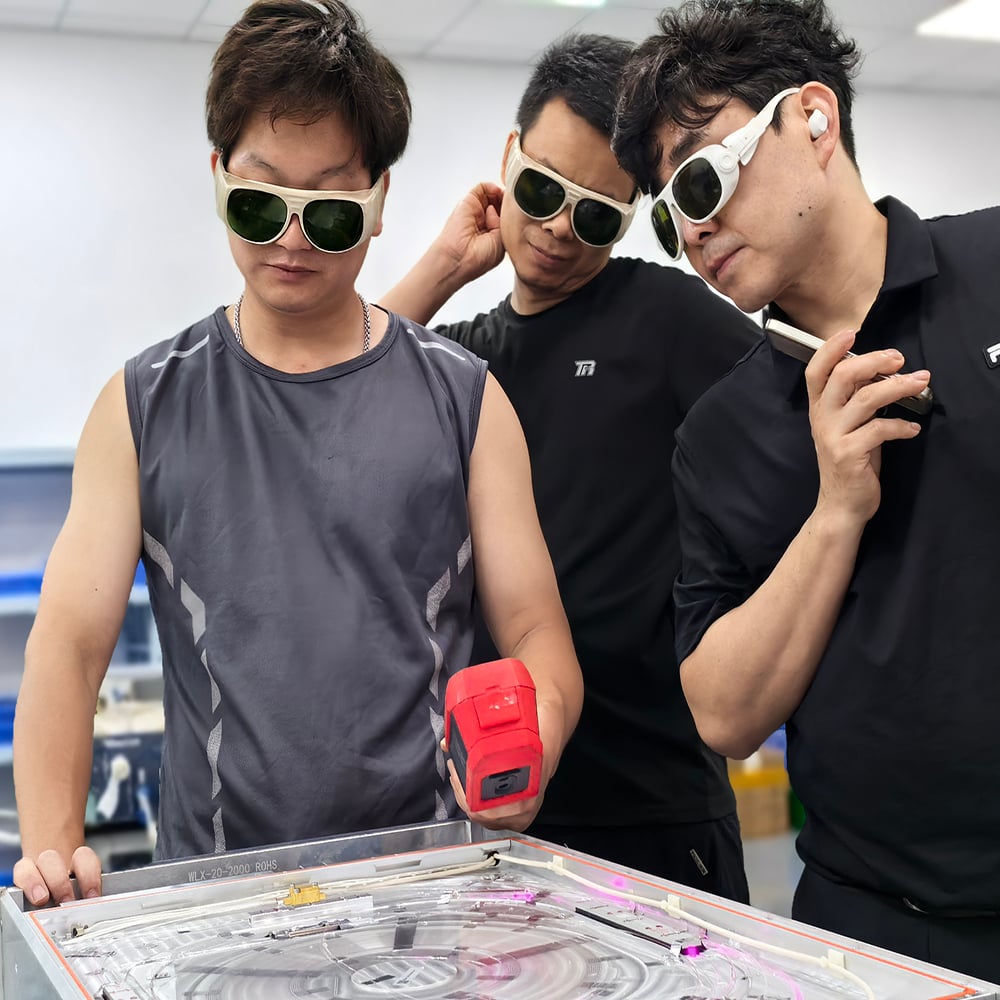
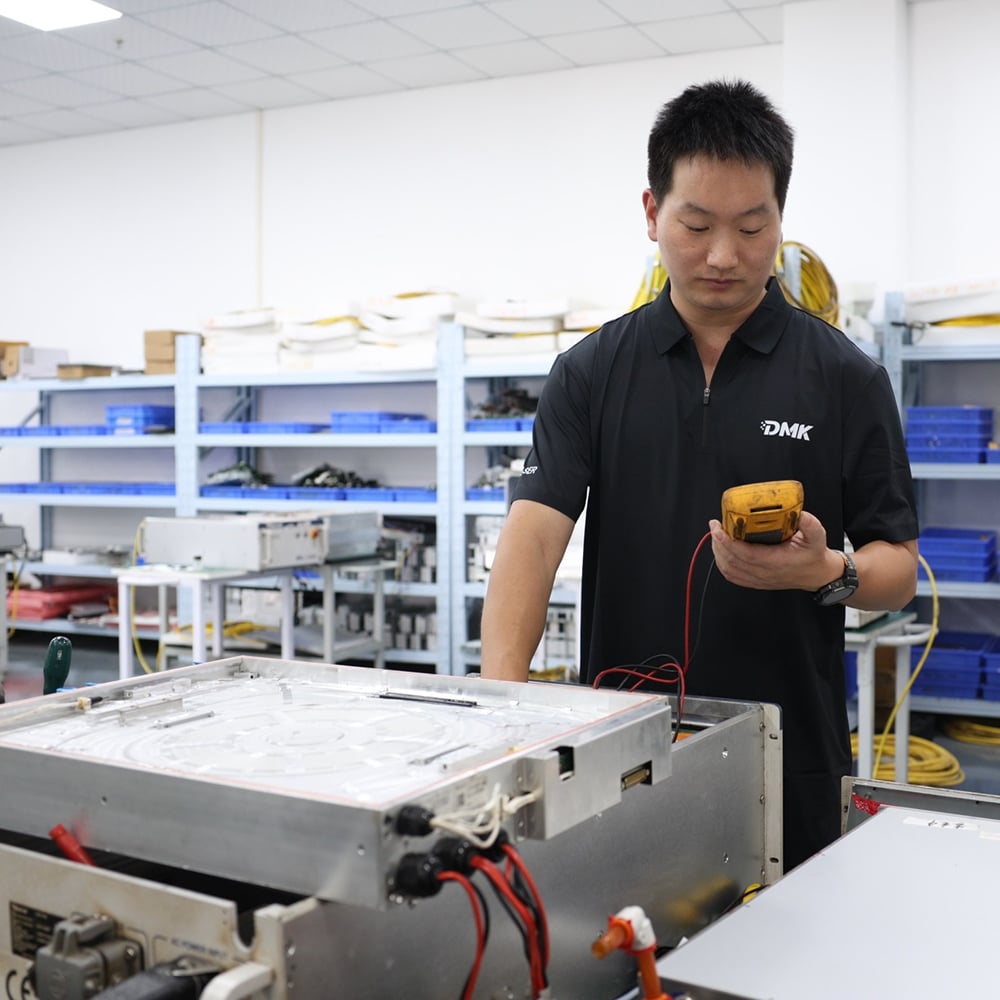
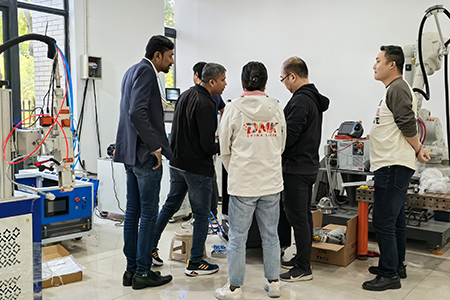
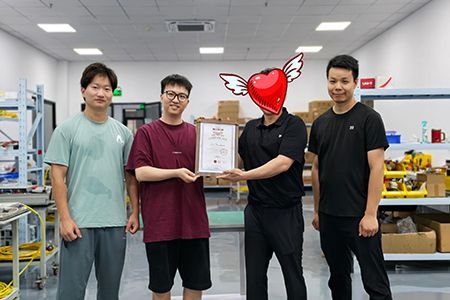
DMK offers hands‑on factory‑based training courses for overseas partners, covering handheld laser welding, platform‑type automatic welding and robot‑based laser welding. Supported by real‑world mainstream‑brand equipment, It further extends to complete‑machine assembly, tooling fixture design, process commissioning and seam tracking system application. The training equips overseas customers with end‑to‑end technical capabilities ranging from component selection, machine assembly and commissioning to process development, supporting the expansion of local laser‑welding‑equipment businesses.
Hands‑on Practice on Handheld Laser Welding Torches and Wire Feeders
This module adopts real Superweiye SUP‑series handheld welding torches for practical training. It disassembles and demonstrates the SUP23T multi‑function 4‑in‑1 welding torch (integrating welding, cutting, cleaning and derusting), the SUP21T fiber oscillating welding torch (3000 W, with built‑in multilingual support and real‑time temperature monitoring), and classic models SUP20S / SUP15S handheld welding guns. Trainees learn about internal optical structures, water‑gas circuit layouts and safety protection mechanisms. Training also covers installation, speed adjustment, manual wire feed / retract switching and stability troubleshooting for the SUP21T multi‑function dual‑wire automatic wire feeder. Participants practice replacing protective lenses and nozzles (copper nozzles / wire guide nozzles), assembling and commissioning wire‑feeding pipelines, and matching wire‑feed speed with laser power for different working conditions to build solid operation and maintenance skills for handheld welding equipment.
 |
 |
Application of Oscillating and Galvanometer Welding Heads
Genuine Raytools hardware serves as teaching specimens to distinguish the features and application scenarios of oscillating and galvanometer welding heads. For oscillating welding heads, the course covers BF330S / BF330M oscillating laser welding heads (2 kW, supporting circular, linear, C‑shaped, S‑shaped and other oscillation patterns) and high‑power models BF12K / BF12U (12 kW, 0‑5 mm X/Y oscillation amplitude, compliant with XY2‑100 protocol). For galvanometer welding heads, it explains path configuration and CCD vision‑module assembly for BG04K / BG06K galvanometer scanning welding heads. It also introduces BW101 / BW101‑GD dual‑galvanometer handheld welding torches (2 kW, 1.7/2.0 mm single‑axis oscillation) and the high‑power BW12K (12 kW) welding head. Trainees master hardware selection, oscillation amplitude / frequency tuning and fault diagnosis for sheet‑metal splicing welding, seal welding and precision‑component welding tasks.
 |
 |
Training on Laser Welding Control Systems
The training is built around control hardware from Shenzhen Pengding Intelligent Control Technology Co., Ltd. It focuses on the PDU1000 laser‑welding control card (USB2.0 communication, compatible with Raycus, Maxphotonics, IPG, JPT and other laser brands, supporting XY2‑100 open‑loop / closed‑loop galvanometer protocols), covering hardware wiring, I/O signal docking and software‑interface operations. It also teaches parameter grouping via the EMC330 motion‑control card for laser power, pen‑light functions and platform travel speed. Participants learn system joint‑debugging with the WOB3000T oscillating welding head (3000 W, oscillation speed up to 3000 mm/s) and the PDSW8000 high‑power galvanometer welding system with dual water‑air cooling. Trainees learn to save, recall and export welding parameters for laser power, pulse width, oscillation settings and wire‑feeding linkage, as well as troubleshoot common system error codes.
 |
 |
Assembly and Commissioning Training for Handheld Laser Welding Machines
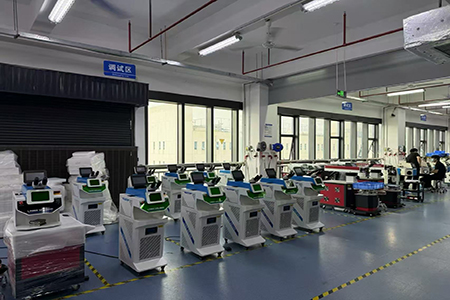
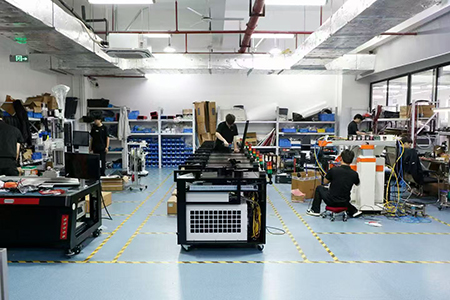
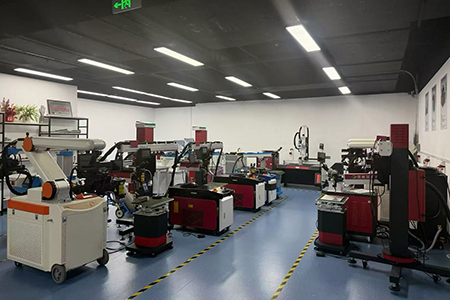
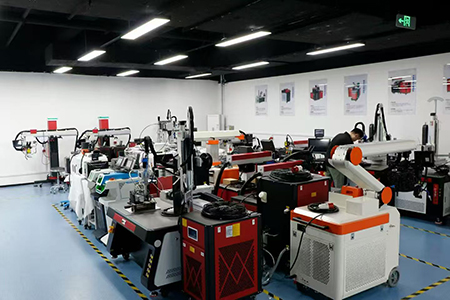
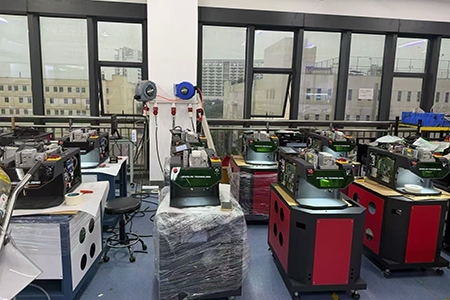
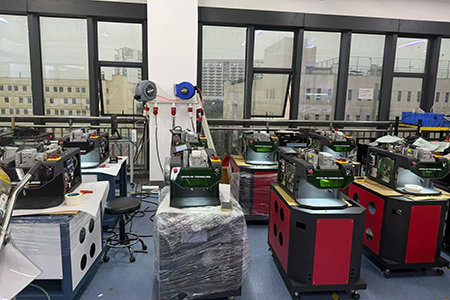
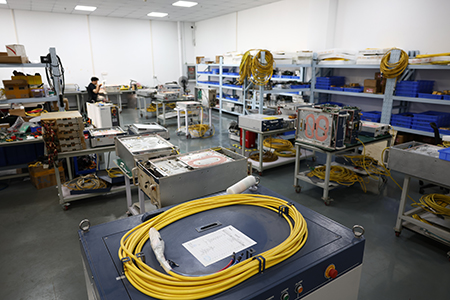
Complete‑machine assembly exercises are conducted in the welding workshop. The workflow covers lasers (Raycus / Maxphotonics / IPG), chillers, control cabinets, SUP23T / SUP21T welding torches and dual‑wire feeders. Trainees practice QBH optical‑connector installation, water‑gas‑circuit sealing, electrical wiring and earthing specifications. Subsequent steps include power‑on commissioning, safety‑loop verification and shielding‑gas (argon / nitrogen) flow calibration following factory acceptance standards. Upon completion, participants are capable of independently assembling, testing and troubleshooting handheld laser welding equipment.
Tooling & Fixture‑Design Principles for Automatic Laser‑Welding Machines
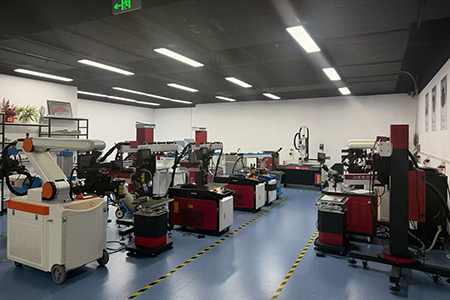
Real‑world workpieces are used to illustrate tooling‑fixture design for automatic welding stations. Core topics include datum‑point selection, clamping‑mechanism layout and welding‑deformation mitigation for sheet metal, profiles and battery‑box assemblies. Lessons cover material selection, clearance‑avoidance structures, quick‑locating pins and toggle‑clamp design rules. Trainees draft and verify simplified fixture schemes for given parts. The module also teaches routine fixture‑accuracy calibration and consumable‑part replacement standards, enabling customers to evaluate and develop custom fixture solutions for end‑user products.
 |
 |
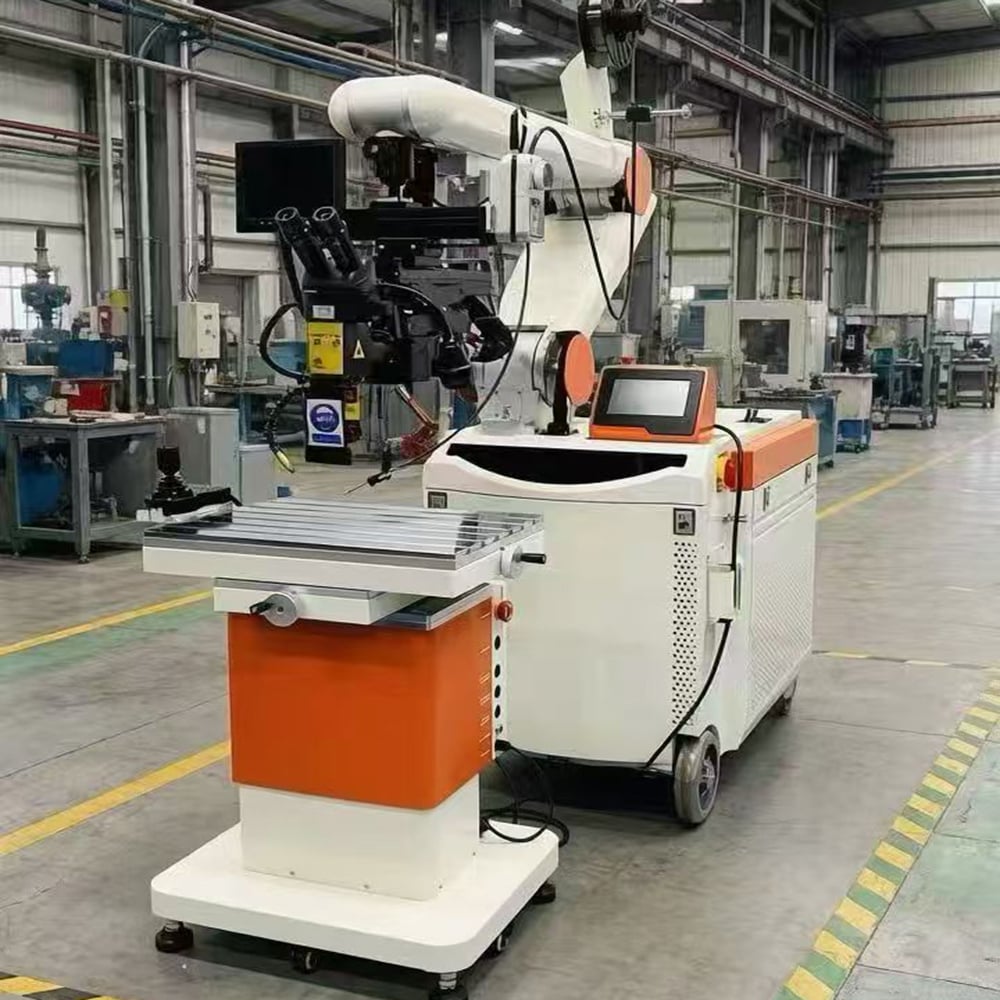
Special‑topic Assembly & Commissioning for Robot‑based Laser‑Welding Stations
This session focuses on six‑axis robot laser‑welding workstation integration. Content includes mechanical assembly and electrical interconnection among robot bodies, laser sources, BF / BG‑series welding heads and chillers. Trainees perform TCP (Tool‑Center‑Point) calibration, robot teach‑in programming and I/O signal handshaking between robots and laser‑welding control systems. Safety‑related configurations such as safety gates, light barriers and emergency‑stop circuits are practiced. Participants learn to resolve typical on‑site issues including motion interference, optical‑path offset and signal handshake failures, and perform full‑system joint commissioning for robot welding cells.
 |
 |
Laser‑welding Processes and Seam‑tracking‑system Implementation
Process‑oriented hands‑on exercises are performed with real‑equipment for carbon steel, stainless steel, aluminium alloy and galvanized steel. Trainees practice butt welding, fillet welding, lap welding and seal welding. They optimize laser power, travel speed, wire‑feed rate and shielding‑gas flow, and identify and remediate welding defects such as porosity, cracking, lack of fusion and undercut. The course covers hardware mounting and calibration for laser seam‑tracking sensors, real‑time seam detection and path‑offset compensation. It explains the linkage logic between seam‑tracking hardware and robot / galvanometer welding systems, improving workstation tolerance against workpiece‑clamping offset and sheet‑metal thermal distortion.