EN
EN
 AR
AR CS
CS NL
NL FR
FR DE
DE IT
IT JA
JA KO
KO PL
PL PT
PT RU
RU ES
ES UK
UK TH
TH TR
TR


Laser Cleaning Technology Training
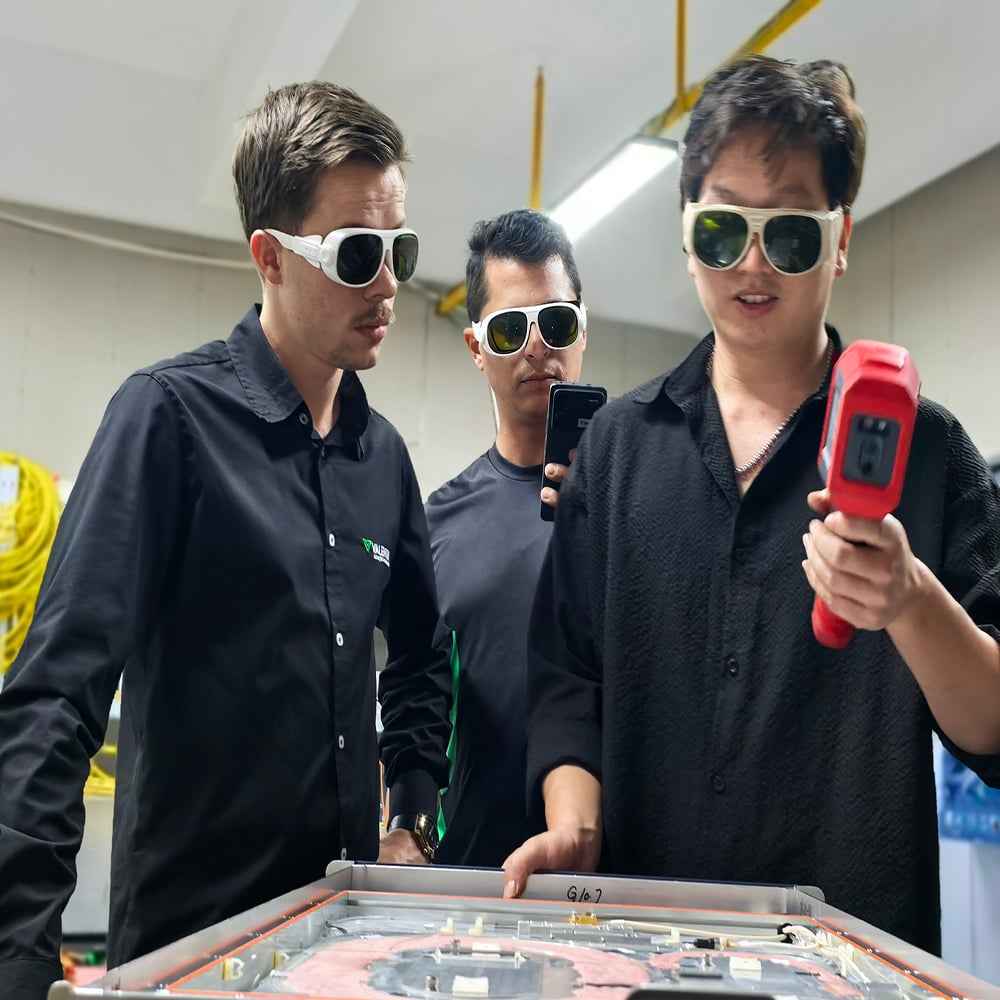
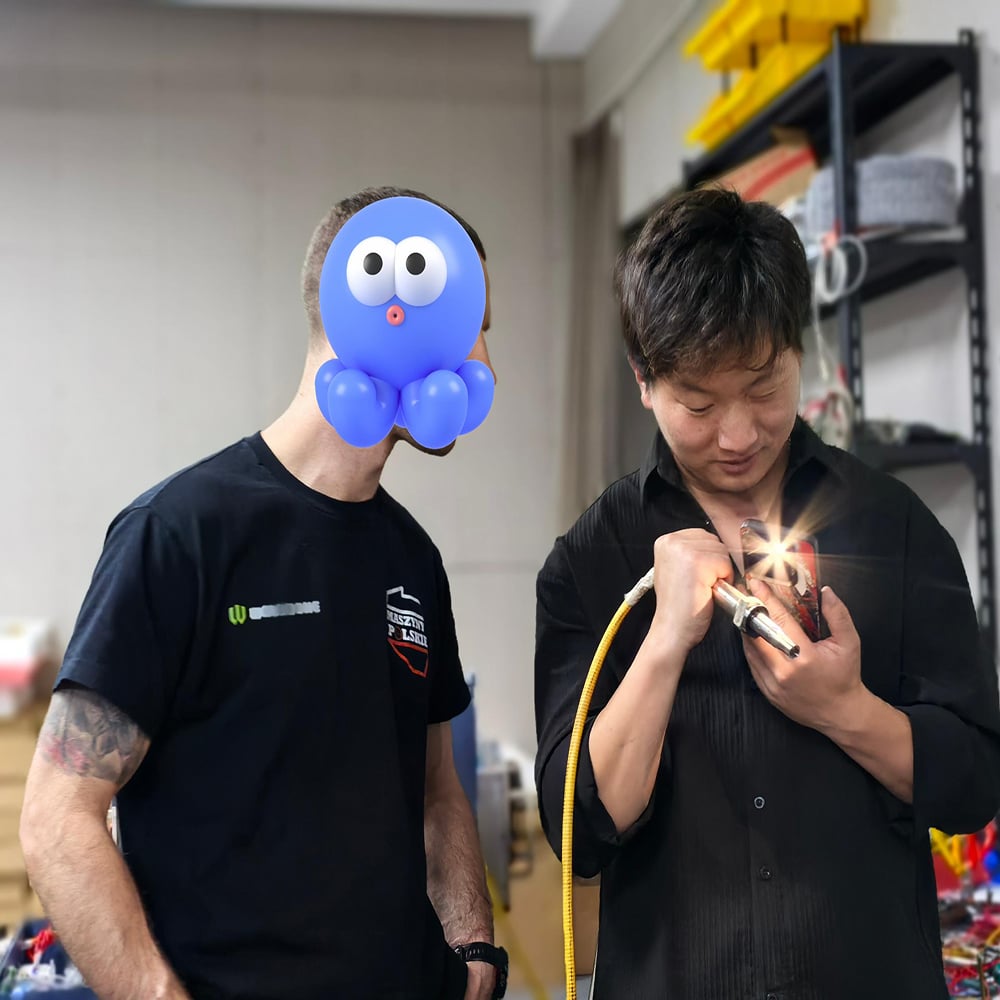
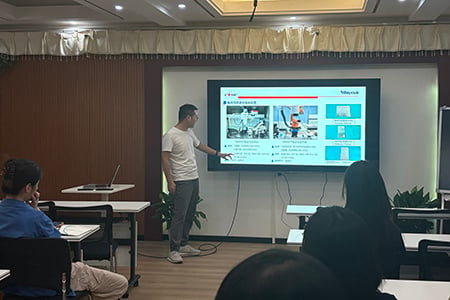
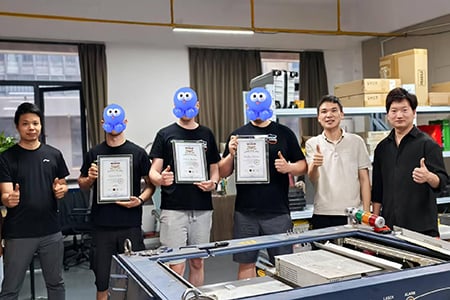
DMK offers hands‑on factory training courses for overseas partners. Based on real‑world DPL‑series pulse laser cleaners, SLCHY‑series composite cleaning equipment and JPT MOPA dedicated laser cleaning lasers, the on‑site workshop training covers seven core modules: MOPA pulse laser cleaning process, assembly of pulse laser cleaning machines, continuous‑laser rust removal and texturing, bright‑surface non‑damage cleaning, paint stripping for wooden furniture, composite laser cleaning technology, and maintenance of handheld laser cleaning heads. Combined with authentic process parameter libraries, the training equips overseas customers with capabilities in equipment assembly, commissioning, process development and operation & maintenance, supporting the expansion of local industrial cleaning businesses.
Fundamentals of MOPA Pulse Laser Cleaning Process
This module starts with laser‑cleaning physical mechanisms. It explains the generation of plasma and shock waves after contaminants absorb laser energy, which triggers photo‑ablation, vaporization, photodecomposition and photo‑vibration for removing oxide layers, rust and paint coatings. Special emphasis is placed on the dual‑threshold principle: the pulse energy density must fall strictly between the contaminant removal threshold and the substrate damage threshold to achieve qualified cleaning results.
Trainees learn selection rules for JPT MOPA laser‑cleaning lasers, and understand the matching relationship among repetition frequency, peak power and single‑pulse energy. They also compare the performance of top‑hat homogenized beam profiles versus Gaussian beams, and learn how top‑hat beams deliver more uniform cleaning and effectively prevent substrate burning.
 |
 |
Practical Assembly of Pulse Laser Cleaning Machines
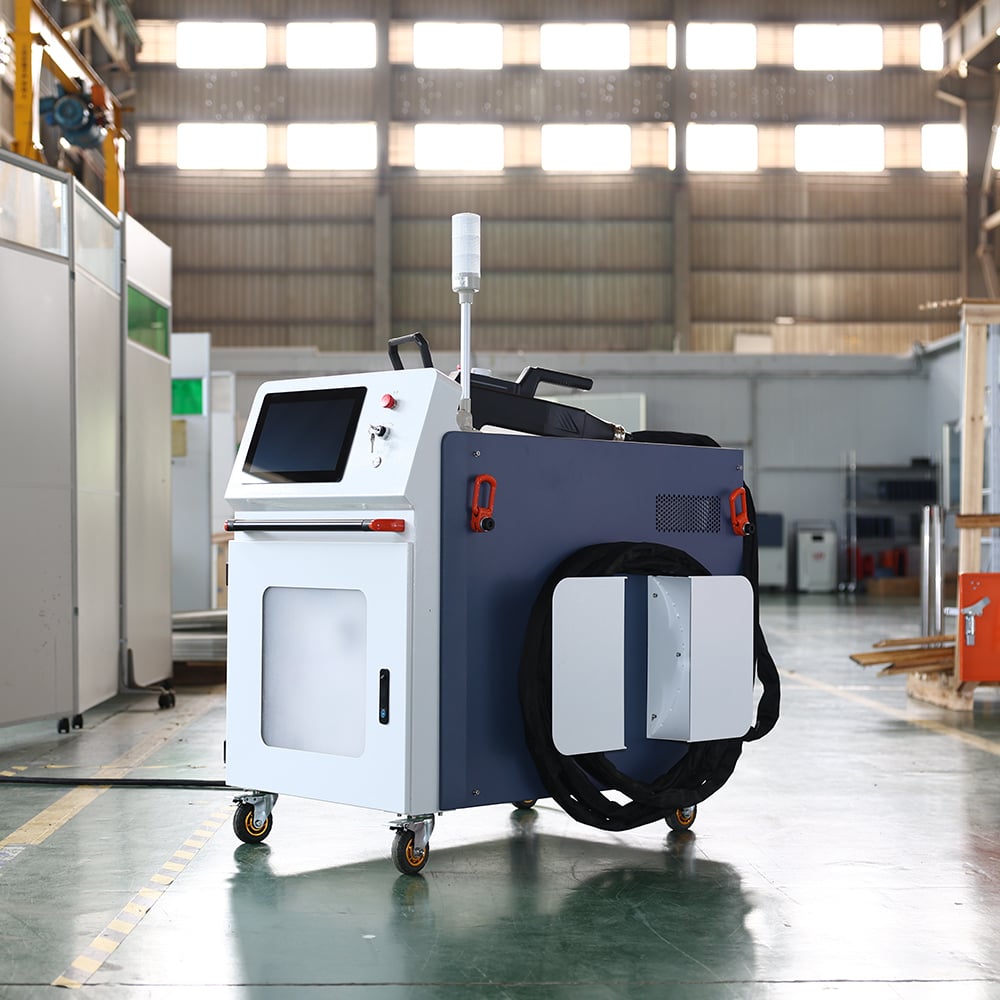
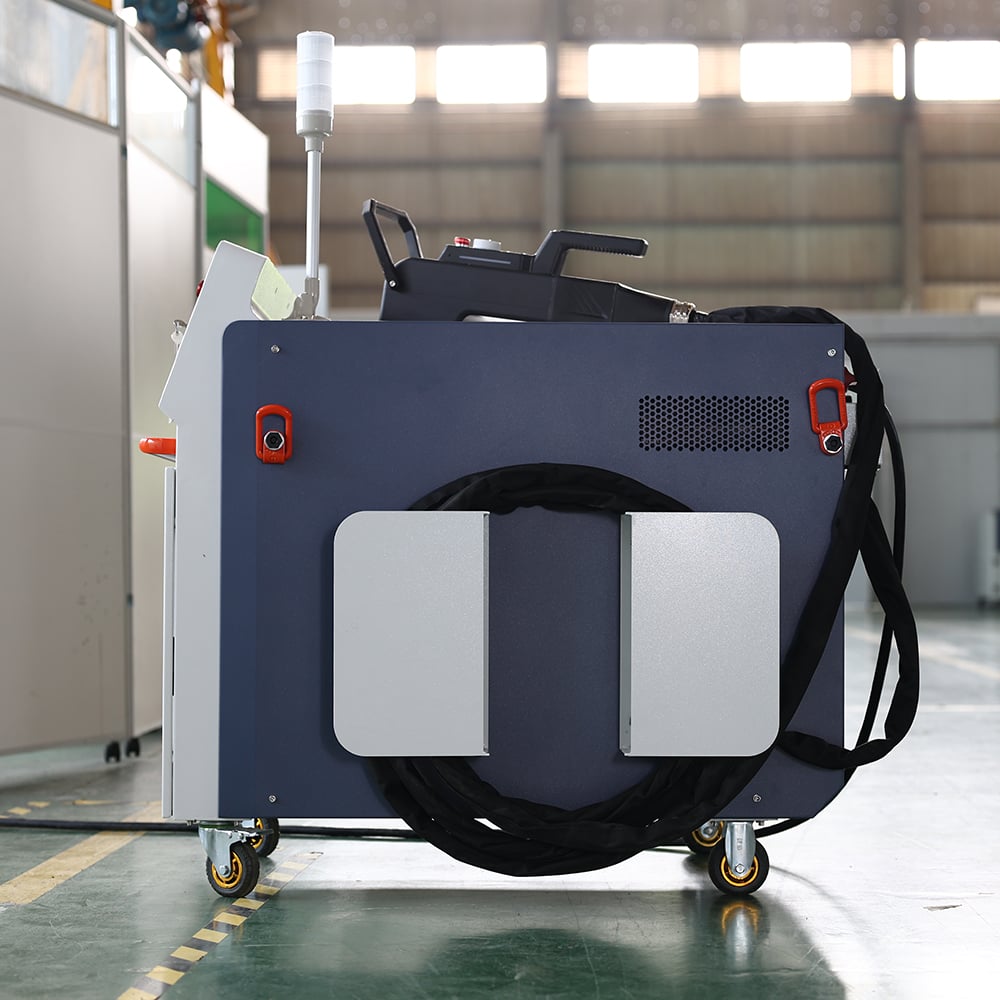
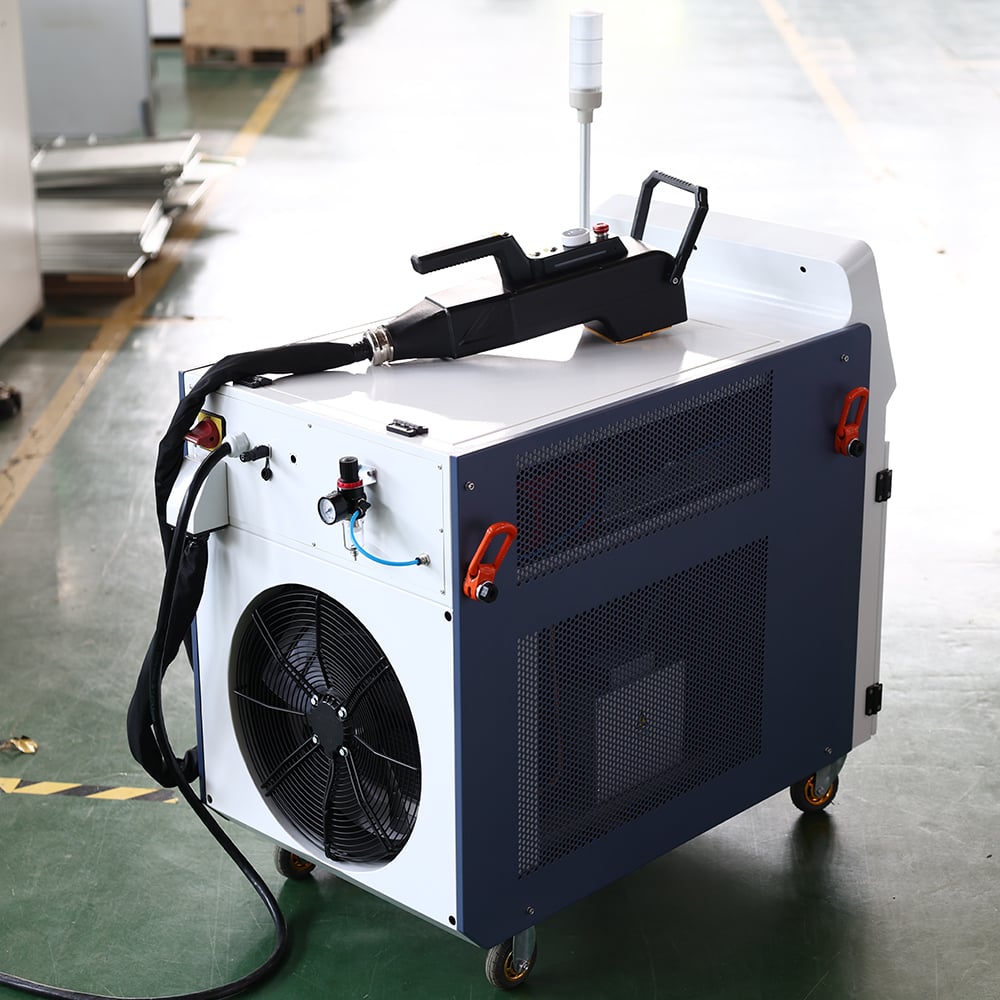
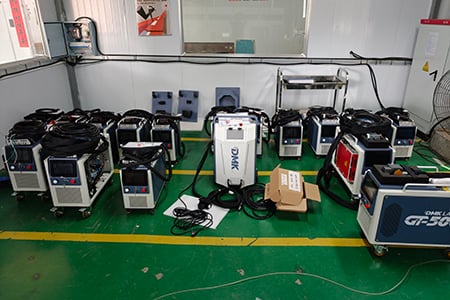
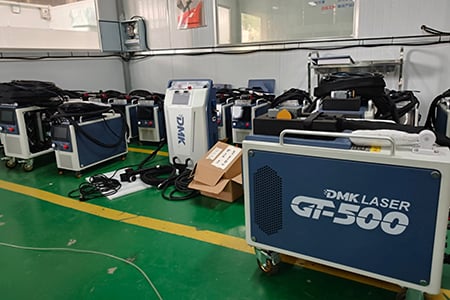
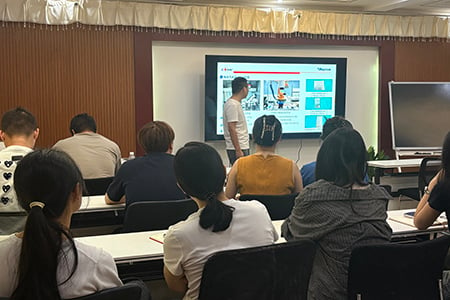
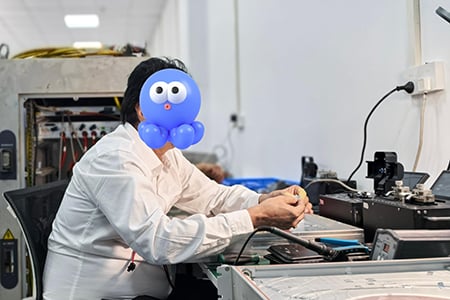
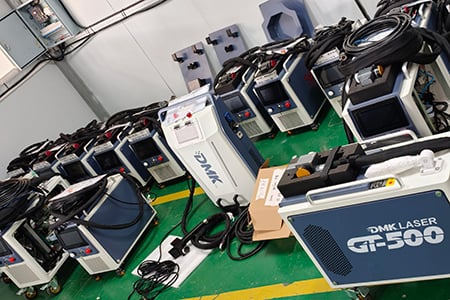
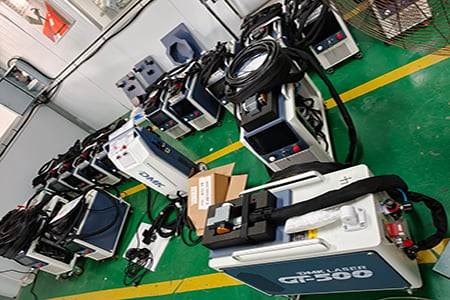
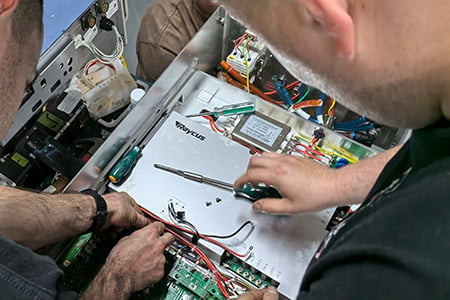
Trainees conduct complete assembly exercises for GT-500 and other pulse‑type handheld laser cleaners in the assembly workshop. Training covers full‑set installation procedures for JPT MOPA pulse lasers, air‑/water‑cooling units, 7‑inch touch‑screen main control cabinets, 1.65 kg QBH‑interface handheld cleaning heads, 5‑meter operation optical fibers and industrial interlock aviation connectors.
Participants practice optical‑path docking (minimum optical‑fiber bending radius ≥150 mm), water‑circuit connection (fill pure water to the green zone of the liquid‑level indicator), connection of oil‑free and water‑free compressed air above 0.6 MPa together with oil‑water separator installation, as well as wiring for emergency‑stop circuits and interlock switches. Factory‑standard power‑on self‑check items are completed, including red guide‑light focusing, replacement of F330/F255/F165 field lenses, and debugging of 12 scanning patterns (Line, Texturing, Random, X‑hatch, Wave, Spiral, Ring, Petal, Rectangle and more) to finish full‑machine factory acceptance tests.
 |
 |
Continuous‑laser Rust Removal and Surface Texturing Process
This module adopts the semiconductor continuous‑laser channel of GT‑500‑3000 composite cleaning equipment as the teaching platform. It illustrates how CW laser strips heavy rust and scale via thermal expansion and thermal‑stress peeling.
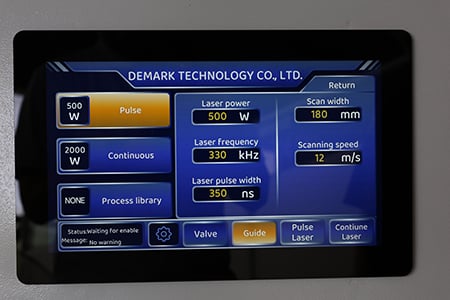
Trainees adjust laser power within the 10%‑100% range, set cleaning width from 10 mm to 60 mm, and match scanning speed with workpiece travel speed for practical sampling on carbon‑steel heavy rust, ship‑board scale and steel‑bar rust removal. In the Texturing mode, scanning width (max. 200 mm) and fill spacing (max. 2800 μm) are tuned to generate uniform micro‑nano roughness on stainless‑steel and aluminum‑alloy surfaces for improved coating adhesion prior to painting.
The course also differentiates laser‑source selection rules: Gaussian beams are preferred for homogeneous‑layer removal such as rust and scale, while top‑hat beams suit heterogeneous‑layer cleaning e.g. tire‑mold cavities.
 |
 |
Bright‑surface Non‑damage Cleaning Process
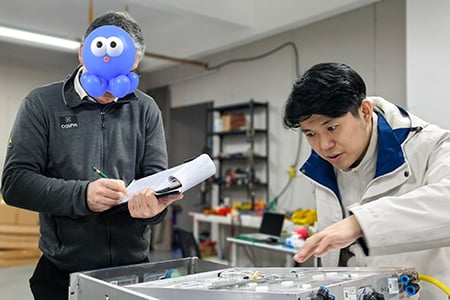
Bright‑surface non‑damage cleaning is an advanced training module. Using the built‑in “Non‑destructive Cleaning” process library, trainees practice removing oil stains, fingerprints and thin oxide films on stainless‑steel brushed surfaces, aluminum‑alloy parts and mirror‑finish copper, without impairing original machining traces or metallic luster.
The core technique is confining energy density within the narrow process window above the cleaning threshold and below the damage threshold. This is achieved by lowering average power, raising pulse frequency to reduce single‑pulse energy, increasing defocus offset, and optimizing incident angle (\(I=I_0·\cos\alpha\)) to avoid back‑reflection from normal incidence.
An aluminum‑alloy pre‑weld cleaning case is demonstrated (100 W power, 8 m/s scanning speed, 240 ns pulse width, 15 mm line width), verifying around 8.7% tensile‑strength improvement of weld joints after pre‑cleaning.
 |
 |
Specialized Paint‑stripping Process for Wooden Furniture
Paint removal for woodwork is a key application of the DPL‑500W‑MC system. Practical sessions focus on renovation of solid‑wood furniture and restoration of wooden handicrafts, removing transparent varnish, colored wood lacquer and oil‑based paint.
Trainees master the “low energy density, high scanning frequency” strategy for wood, a low‑thermal‑conductivity substrate prone to carbonization. Process database sampling is performed with typical pulse‑width settings around 150 ns, with frequency matched according to JPT laser power grades. Line mode and Rect fill mode are deployed to control cleaning trajectories and prevent local over‑burning and blackening. Lessons also cover influences of scanning width and fill spacing on wood surface discoloration, plus empirical process offsets for different wood species such as oak, walnut and density board.
 |
 |
Composite Laser Cleaning Technology (Pulse + Continuous Semiconductor Laser)
Teaching is centered on the GT‑500‑3000 composite laser cleaning equipment, which integrates pulse laser and 1080 nm semiconductor continuous laser, with total power ≤15 kW and 3‑phase 380 V power supply.
Trainees learn the composite‑cleaning principle: the continuous semiconductor laser pre‑heats and softens contaminants through thermal expansion, then the pulse laser completes material stripping via photo‑shock and shock‑wave effects. The combined solution delivers higher efficiency and enables cleaning of high‑reflectivity materials. Practical parameters include 300 W pulse @ 20 kHz, 9.6 m/s scanning speed, 80 mm line width, overlaid with 2000 W semiconductor laser at 70% power output.
Participants compare limitations of single‑pulse cleaning for heavy rust and thick grease, and learn advantages, dual‑optical‑path synchronization, timing coordination and power‑ratio tuning of composite processes for rust removal, heavy‑paint stripping and high‑reflectivity metal processing.
 |
 |
Maintenance and Troubleshooting for Handheld Laser Cleaning Heads
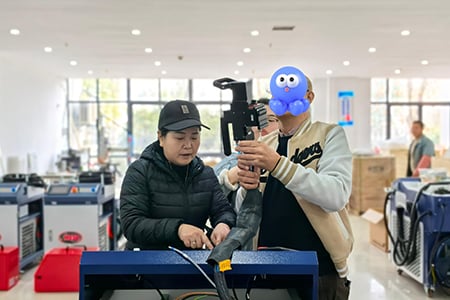
This module targets field service engineers and covers standardized disassembly and maintenance workflows for handheld cleaning heads. Contents include pre‑/post‑shift inspection of field lenses and protective windows for dust or burn marks using lens tissue; dust‑free rapid‑replacement procedures for 52×2 spec protective windows; shutdown criteria upon minor lens burning or degraded laser output; inspection of QBH connectors and corrugated fiber tubes for squeezing damage (fiber bending radius ≥150 mm).
Common fault‑tree drills are carried out: no machine power (emergency‑stop not reset / circuit‑breaker tripped); no red guide light (field‑lens protective cover retained / front‑lens broken); zero laser output (chiller not at target temperature / laser enable off / severe focus drift); weak laser output (clean field lens / re‑focus). Trainees also learn winter antifreeze proportioning (mixing ratio from 2:8 to 6:4 according to ambient temperature), 0.6 MPa compressed‑air optical‑path protection and synchronized dust‑collection with vacuum cleaners for daily routine maintenance.