EN
EN
 AR
AR CS
CS NL
NL FR
FR DE
DE IT
IT JA
JA KO
KO PL
PL PT
PT RU
RU ES
ES UK
UK TH
TH TR
TR



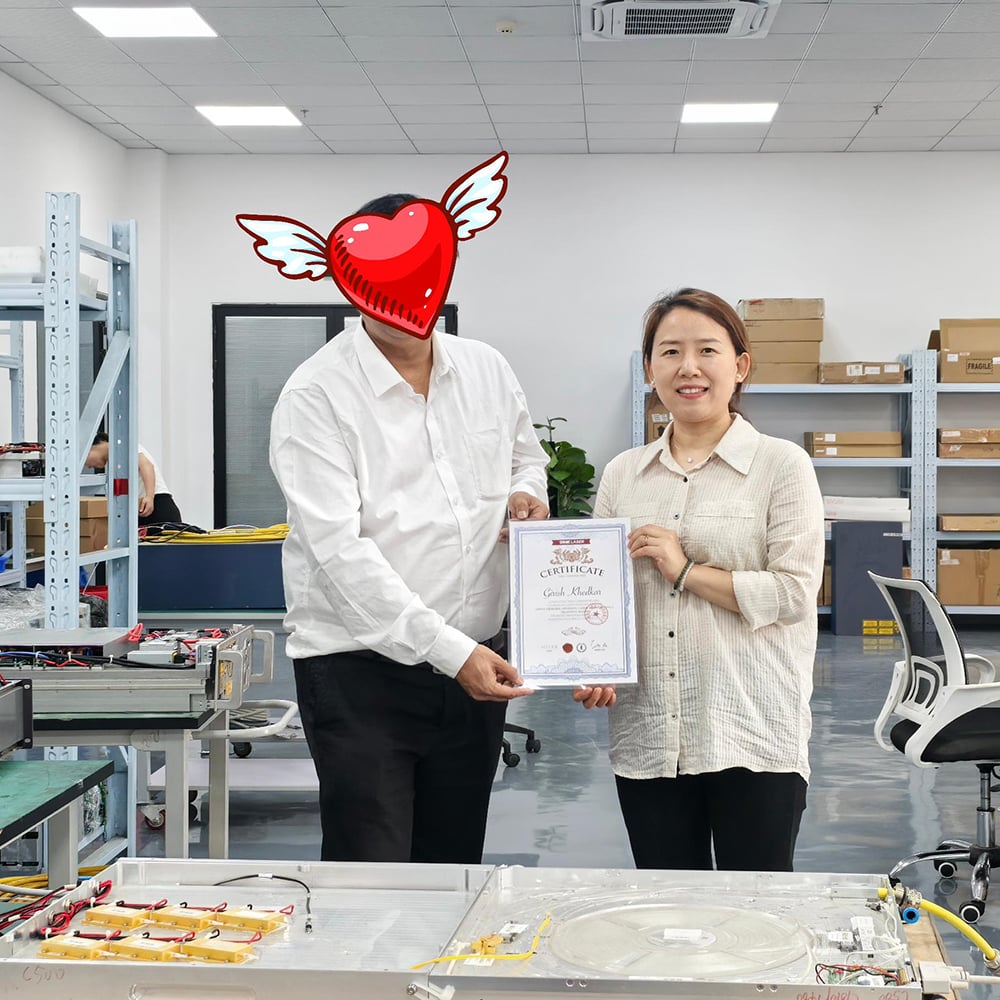
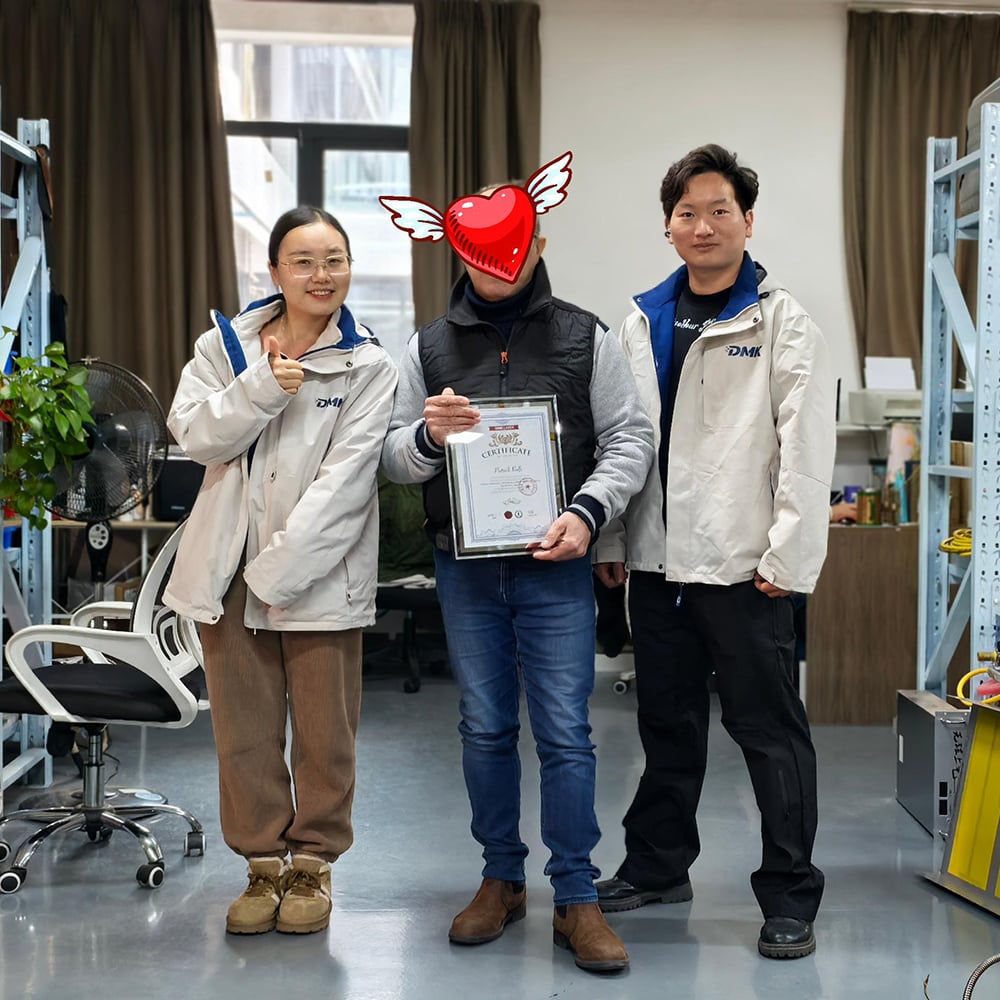
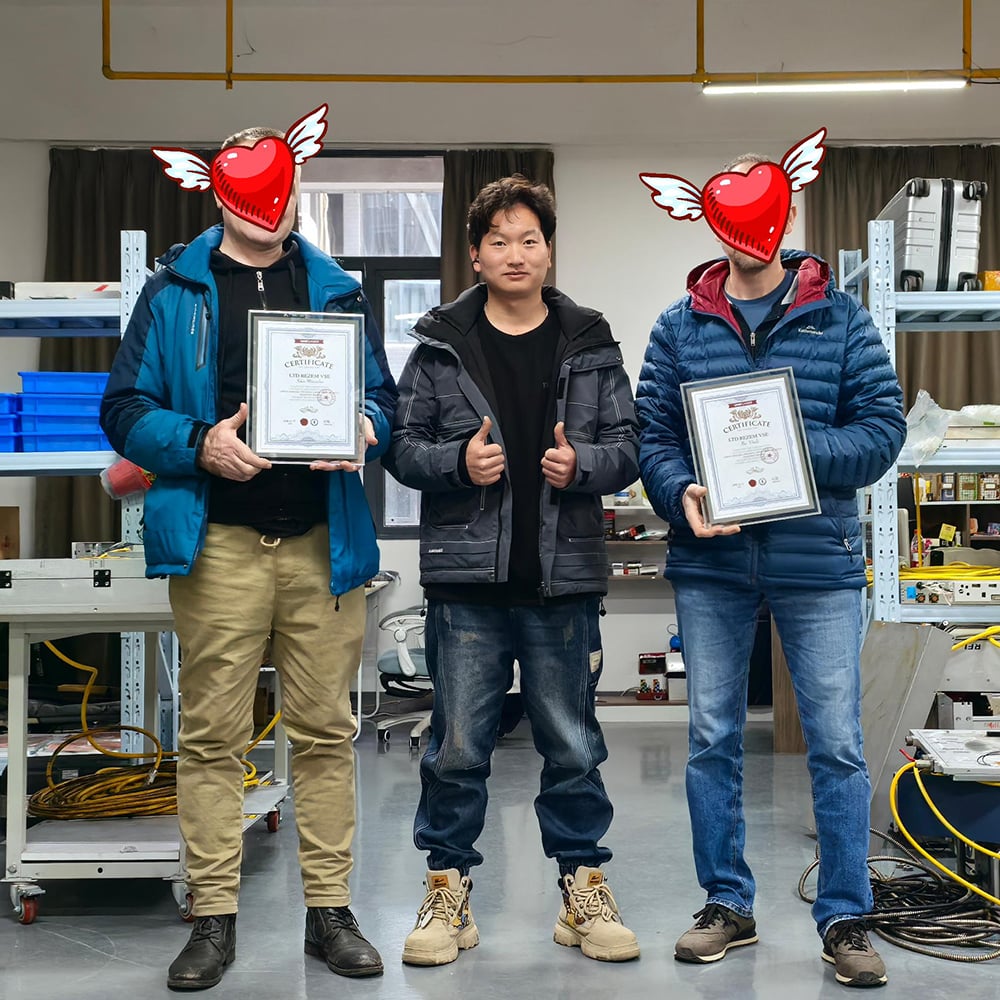

Fiber Laser Source Maintenance Practical Training
With the widespread application of fiber laser equipment in sheet‑metal cutting and metal welding industries, laser source failures occur frequently. Long turnaround times and high costs for outsourced repairs make mastering in‑house fiber laser source maintenance a core competency for equipment service providers and maintenance engineers to cut costs and improve efficiency. This practical training covers theoretical principles, fault diagnosis, tool operation, component disassembly & replacement, and final assessment. A complete supply chain of brand‑new and used maintenance spare parts is available for trainees, so you will never worry about component sourcing after completing the training.
1. Systematic Theoretical Training: Understand Laser Source Principles and Identify All Core Components
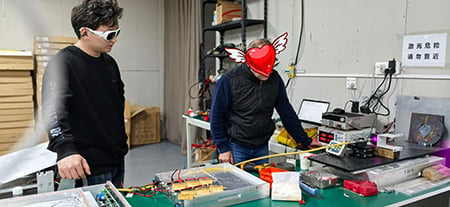
This course starts with the fundamental working principles of fiber laser sources. It elaborates on the classification, architecture and operating mechanisms of mainstream laser sources from IPG, Raycus and Maxphotonics. Both electrical and optical components are explained in detail to ensure full recognition and comprehension.
 |
 |
Electrical Component Recognition
Three frequently‑repaired electrical components are covered: switching power supply, current drive board and control board.
- Switching Power Supply: The most‑frequently replaced electrical part for laser sources. Damage can be caused by grid‑voltage fluctuations, voltage spikes from high‑power equipment startup/shutdown, three‑phase phase loss or unbalance, lightning strikes, poor heat dissipation and internal condensation. Trainees learn parameter identification, damage characteristics and model‑matching guidelines.
- Control Board: The “brain” of the laser source, responsible for signal interaction, operating‑status monitoring and safety protection. Common faults linked to control‑board damage include over‑temperature water alarms, communication failures, inability to adjust laser power via software, no laser output despite normal external signals, and false startup alarms. Trainees learn to identify fault symptoms and perform basic diagnosis.
- Current Drive Board: Delivers low‑voltage high‑current output to pump sources and regulates laser power by adjusting current. High‑temperature conditions, component aging and short‑circuited pump sources commonly burn out drive boards. Trainees study parameter matching and fault screening.
Optical Component Recognition
Detailed instruction covers pump sources, forward combiners, backward combiners, gratings, Yb‑doped gain fiber, cladding mode strippers, delivery fibers, laser modules, protective lenses and high/low‑refractive‑index UV curing adhesives.
- Pump Source: The source of laser energy. Trainees learn mainstream power‑rated models of different brands and master quick performance‑verification using a low‑power laser power meter.
- Forward & Backward Combiners: Common models such as Raycus and Maxphotonics 6+1×1 and 4×1 combiners are covered. Trainees sort out fiber‑link logic and connection points for pump sources and red‑light indicators.
- Yb‑doped Gain Fiber: The core gain medium for laser generation. Combined with delivery‑fiber structures, the four‑layer construction (core, inner cladding, outer cladding and coating) is explained, along with principles for laser transmission and pump‑light confinement.
- Cladding Mode Stripper: Two key functions: filter residual unabsorbed pump light remaining in fiber cladding, and block back‑reflected light generated while processing highly‑reflective materials to protect internal laser components. Model‑selection guidelines for Raycus and Maxphotonics are provided.
- Delivery Fiber: Distinguish single‑mode and multi‑mode cutting / welding delivery fibers for IPG, Raycus and Maxphotonics, including specifications such as 50/125, 50/360, 100/360, 25/400 for QBH/QD connectors. Analyze failure triggers including burned fiber, blackened crystals and fractured joints. Mandatory operational rules are taught, such as minimum fiber‑bending radius and correct inlet‑outlet water‑port connection.
- Laser Module: Multi‑mode laser sources achieve high‑power output via superposition of multiple laser modules. Taking the Raycus 6000X (3 × 2000 W modules) as an example, trainees learn emergency operation by shielding faulty modules, as well as model differentiation and replacement‑matching requirements for modules of various brands and power ratings.
- Protective Lenses & High/Low‑Refractive‑Index UV Curing Adhesives: Identification of original protective lenses. UV curing adhesives are specially formulated for fiber splices. Trainees learn application scenarios for high‑index and low‑index adhesives, plus requirements for light‑shielded storage under constant 25 °C temperature.
2. Practical Fault Diagnosis: Software Analysis + Root‑Cause Troubleshooting
 |
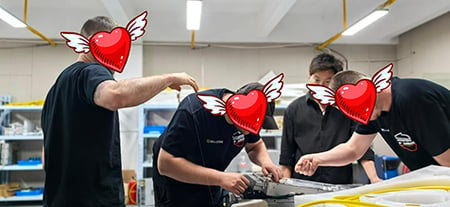 |
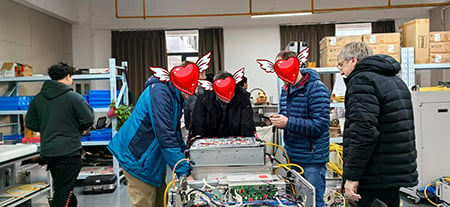
- Operation & Application of Upper‑monitoring Software: Get proficient with brand‑specific laser‑source monitoring software. Read operation logs and alarm codes; acquire real‑time parameters including power, temperature, drive current and water temperature to preliminarily locate faulty units from data readings.
- Analysis & Resolution of Typical Faults: Case‑based training covers frequent field failures: QBH coating / fiber‑core burnout induced by back‑reflection, lens burning spots caused by optical contamination, high‑temperature aging from insufficient heat dissipation, crystal blackening due to condensation corrosion, fiber‑joint fracture caused by frozen water circuits in winter, pump‑source power decay, drive‑board over‑current damage, communication breakdown, power attenuation and recurrent alarms. Standardized troubleshooting workflows are established for each fault type.
3. Hands‑on Training with Professional Maintenance Tools
Practical operation of specialized maintenance equipment, including operating essentials, parameter configuration and safety prohibitions:
 |
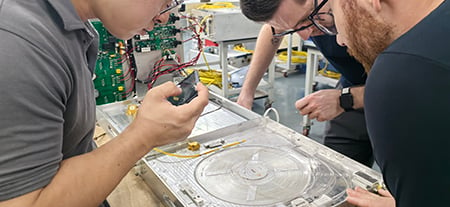 |
- Large‑core Fiber Cleaver: Prepare end‑faces for large‑diameter fiber; evaluate end‑face quality to prevent component burnout caused by defective end‑faces.
- Large‑core Fiber Fusion Splicer: Perform fusion splicing for large‑core‑diameter fiber; adjust splicing parameters and control splicing loss.
- Laser Power Meter: Screen pump‑source performance and test overall laser output power. Learn range‑selection, calibration and measurement procedures.
4. Practical Component‑Replacement Training to Build Real‑world Maintenance Competence
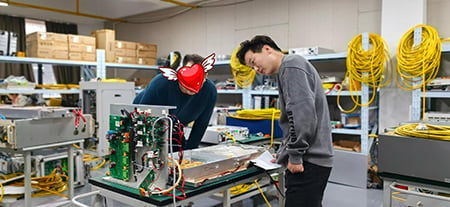
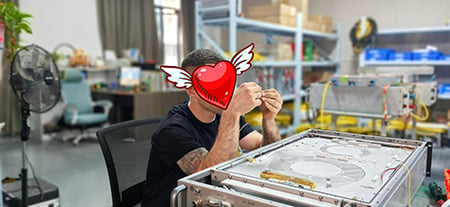
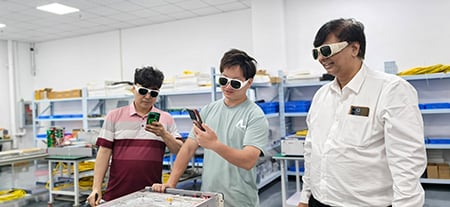
All practical sessions are carried out on real equipment inside the maintenance workshop rather than theoretical lectures only.
 |
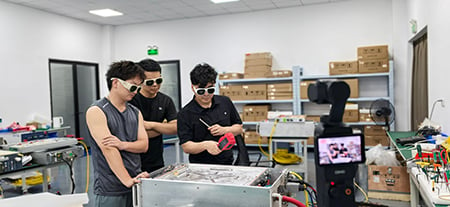 |
- Electrical‑component Replacement Practice: Dismantle, inspect model compatibility, replace, re‑wire and commission switching power supplies, drive boards and control boards. Learn anti‑static protocols and troubleshoot secondary alarms after component replacement.
- Optical‑component Replacement Practice: Hands‑on exercises cover delivery‑fiber replacement, laser‑module disassembly and replacement, combiner disassembly & repair, pump‑source swap, fiber stripping, fusion splicing, UV adhesive curing, fiber assembly and QBH‑module commissioning. Trainees reproduce complete real‑world maintenance workflows.
Spare‑part Support: The training base stocks a full range of brand‑new and used laser‑source spare parts. Demonstrations cover component inspection, aging testing, packaging and shipment. Upon completion, trainees gain access to the spare‑part supply chain, removing barriers for future maintenance‑service business.
5. Graduation Assessment & Certificate Issuance
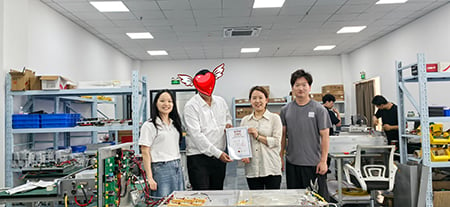
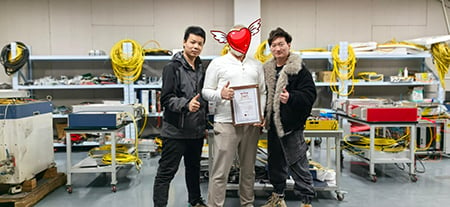
A comprehensive final assessment combines written theoretical tests and hands‑on real‑machine practical exams, evaluating competence in component identification, fault analysis and component‑disassembly maintenance. A graduation certificate will be awarded to participants who pass the assessment, providing qualification proof for engineers seeking employment or delivering laser‑source maintenance services.
Join our practical maintenance training if you want to upgrade your fiber‑laser‑source repair capabilities and independently resolve faults on mainstream Raycus, Maxphotonics and IPG models.
 |
 |